Streaks are one of the few product mechanisms used to achieve widespread adoption. You’ve probably encountered a streak counter while learning a language, tracking workouts, contributing to open-source projects, or even developing a daily journaling habit.

Product teams love streaks because they’re simple, easy to understand, and often effective. Executives and investors value the engagement they can produce, while product managers view them as a proven way to encourage consistent use.
The problem is that conversations about streaks often end there. PMs overlooked the tension between short-term engagement and long-term motivation. A streak may increase daily activity today while also making it more likely that a user disengages tomorrow.
When users inevitably miss a day, the same mechanism that promotes consistency can create stress, anxiety, and fragile engagement habits. However, that doesn’t mean streaks are inherently harmful. Some of the world’s most successful products have built retention strategies around them.
The challenge is determining when streaks create genuine user value and when they merely inflate engagement metrics. Streaks can definitely work, but it’s up to you decide whether they help users succeed or just make dashboards look better.
The reason streaks are attractive is because they create immediate behavioral changes. A user who might otherwise skip a session opens your app because they don’t want to break a seven-day streak. Someone who wasn’t planning to engage today spends a few minutes checking in to maintain continuity.
From a metrics perspective, this looks like a win. Daily active users increase, session frequency improves, and retention curves appear healthier.
However, engagement is easier to measure than motivation.
When users first join a product, they’re often driven by an intrinsic goal. They want to learn a language, improve their fitness, become a better developer, or establish a valuable habit. Over time, streak mechanics can subtly change that motivation.
Instead of asking, “Am I making progress toward my goal?” users begin asking, “How do I keep my streak alive?”
At that point, maintaining the streak becomes the goal rather than supporting the outcome it was originally intended to produce.
This creates a conflict that every product manager should understand. Streaks optimize for consistency, while your users ultimately care about outcomes. The mechanic works best when frequent use and user success are closely aligned. That said, problems can quickly emerge when they aren’t.
Streaks are most effective when they reinforce behaviors that already create meaningful value.
The strongest use case for a streak is when regular engagement directly contributes to user success.
Consider learning a language. Frequent exposure and repetition support skill development. A user who practices for 10 minutes each day will generally make more consistent progress than someone who studies intensively once every few weeks.
In this case, the streak doesn’t manufacture an arbitrary behavior. It reinforces one that’s already beneficial.
The same principle can apply to meditation apps, journaling tools, fitness products, and educational platforms where consistency is closely connected to results.
The key question is simple: Does increasing the frequency of this behavior provide more value to the user?
If the answer is yes, a streak may be an appropriate retention mechanism.
Streaks can also be useful during the early stages of the user journey.
New users often struggle to establish routines. They haven’t yet experienced the product’s long-term value, which makes them more likely to abandon it. A streak creates immediate structure. Rather than deciding from scratch whether to return, the user has a clear reason to come back tomorrow.
This can be especially valuable during onboarding, when small behavioral nudges help users reach activation milestones more quickly.
In this context, the streak acts as a set of training wheels rather than a permanent motivational system. Once the user has formed a routine or experienced the product’s core value, the product may need to reduce its reliance on the streak.
Healthy streak systems align the interests of the user and the product. When users engage more frequently, they should also achieve better outcomes. If increased activity doesn’t improve user success, the streak risks becoming an artificial incentive disconnected from meaningful progress.
Streaks start to cause problems when product teams become overly focused on activity metrics. Let’s look at three common times when this arises:
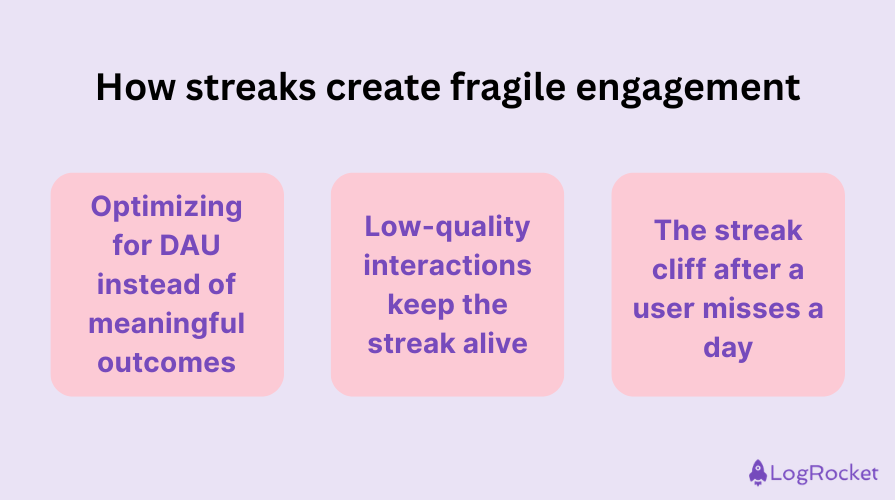
Many organizations celebrate increases in daily active users without asking why those increases occurred.
A streak may improve DAU, but that doesn’t necessarily mean users are receiving more value.
Imagine a productivity app that encourages users to open it every day to maintain a streak. The product may successfully increase activity, but users may not become more productive. The metric improves while the underlying outcome remains unchanged.
This creates a risky environment where teams optimize for participation instead of impact. Frequency-based metrics may suggest that users are thriving when they’re actually acting out of obligation.
It’s important that you distinguish between users who return because the product is useful and users who return because they are afraid of losing progress.
When maintaining the streak becomes the primary goal, user behavior often changes.
Instead of engaging meaningfully, users look for the quickest action that qualifies. This looks like a language learner who completes the easiest available lesson, a fitness user who records a minimal workout, or a developer who makes a minor code change to add another square to a contribution graph.
These interactions count as activity, but they may contribute little to the user’s broader goal.
The streak remains intact while the quality of engagement declines. If you only measure frequency, you may mistake this behavior for strong product health.
Every streak eventually ends. You need to ask yourself what happens next.
The term “streak cliff” describes the sharp decline in engagement that can occur immediately after a user breaks a long-running streak.
A user may remain active for weeks or months before disappearing after missing a single day. The streak has become part of the user’s sense of progress, so losing it feels more significant than simply skipping one session.
The longer the streak, the greater the potential downside. A three-day streak is relatively easy to rebuild. A 300-day streak can feel irreplaceable.
As the number grows, so does both the motivational value and the emotional cost of losing it. Users who break a long streak may feel that they have failed or erased months of work, even if their underlying progress remains intact.
This can make reactivation more difficult. Starting over feels discouraging, so users delay their return. Days become weeks, and temporary disengagement can turn into permanent churn.
Before implementing a streak, you should challenge the following common assumptions.
Not every product benefits from daily engagement.
Tax softwares don’t require daily use, travel-booking tools don’t need users to return every morning, and real estate marketplaces may be useful during an active search but irrelevant once that search ends.
Adding streaks to these products could create artificial engagement without improving outcomes.
Always start by asking yourself whether increased usage naturally leads to greater user success. If your ideal customer doesn’t need the product every day, the product shouldn’t pressure them to behave as though they do.
Healthy products should tolerate ordinary human behavior. Users get busy, travel, become sick, take vacations, and change routines.
A missed day shouldn’t erase the value they’ve already created.
If skipping a single session substantially damages the experience, the product may have a larger design problem. Strong retention systems help users recover from interruptions rather than punishing them for having one.
This is particularly important in products related to fitness, education, health, or personal development. Progress in these areas is rarely perfectly consistent.
This may be the most important question to ask yourself.
Does the streak encourage meaningful improvement, or does it simply encourage check-ins?
A strong streak system rewards actions that are closely connected to the user’s desired outcome. A weak one rewards whatever behavior is easiest to count.
Before launching a streak, define the user behavior you want to reinforce and explain how that behavior contributes to long-term success. If your team cannot clearly establish that connection, a streak may not be the right mechanism.
As the PM, your goal should be to design streaks that offer users greater flexibility.
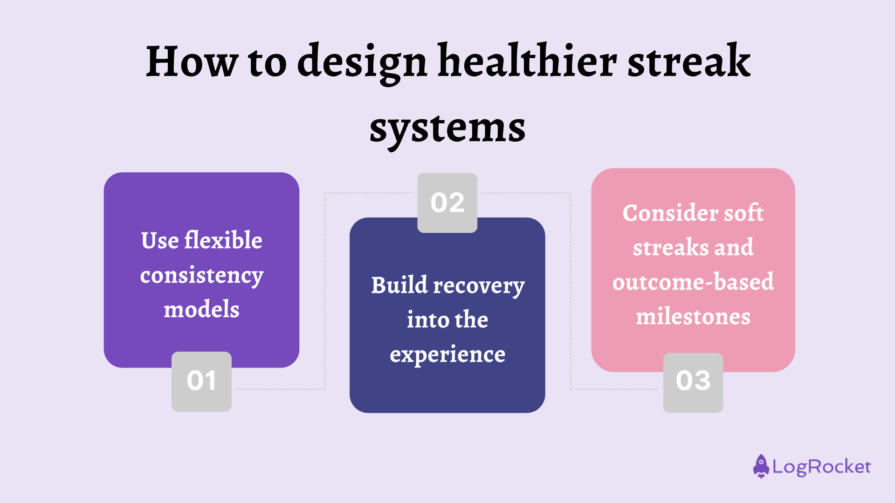
Traditional streaks demand perfect daily participation. More flexible systems can reward commitment without requiring perfection.
Examples include:
These approaches recognize that consistency doesn’t always mean completing the same action every day.
A user who exercises four times each week for six months may have developed a stronger habit than someone who opens an app daily to log a minimal action. The product should reward the behavior that creates value, not the behavior that’s easiest to measure.
Recovery should be part of the original streak design rather than an afterthought.
Common recovery mechanics include:
Duolingo is one of the best-known examples of this approach. Daily practice is closely aligned with language learning, but the product also offers streak freezes that protect users when they miss a day.
The feature acknowledges that even when a streak supports a valuable habit, users still need flexibility.
Recovery mechanics reduce the likelihood that one interruption will turn into long-term churn. They also communicate that the product values continued progress more than perfect compliance.
Traditional streaks usually reset to zero immediately. Soft streaks reduce that penalty.
Instead of erasing all progress, a soft-streak system might gradually reduce the user’s consistency score or preserve part of their previous achievement. The user experiences a setback without feeling that everything has been lost.
Products can also replace activity-based streaks with outcome-based milestones.
Instead of rewarding users for simply showing up, recognize meaningful accomplishments such as:
Outcome-based recognition connects product incentives to user success. It shifts the focus from maintaining an arbitrary number to making measurable progress.
Daily active users and session frequency provide only part of the picture. Product managers should also measure what happens before, during, and after a streak ends.
Treat streaks as experiments rather than permanent features. Test different qualification rules, grace periods, recovery mechanics, and reward structures.
Most importantly, evaluate both the positive and negative effects. A streak that increases DAU but lowers reactivation after breakage may not be improving long-term retention.
When assessing a streak system, ask whether users would continue to engage if the streak disappeared tomorrow?
If the answer is no, the product may be overly dependent on the mechanic.
Streaks remain one of the most effective retention tools available to product teams. They can help users establish habits, remain consistent, and build momentum toward meaningful goals.
However, poorly designed streaks create pressure instead of motivation, activity instead of progress, and dependency instead of commitment. They can improve engagement metrics while quietly increasing the risk of future churn.
Product managers should not treat streaks as inherently good or bad. They’re tools whose value depends on the behavior they reinforce, the flexibility they provide, and the outcomes they help users achieve.
Your goal should be to help users make meaningful progress and create a retention system that continues to work after the streak ends.
Featured image source: IconScout
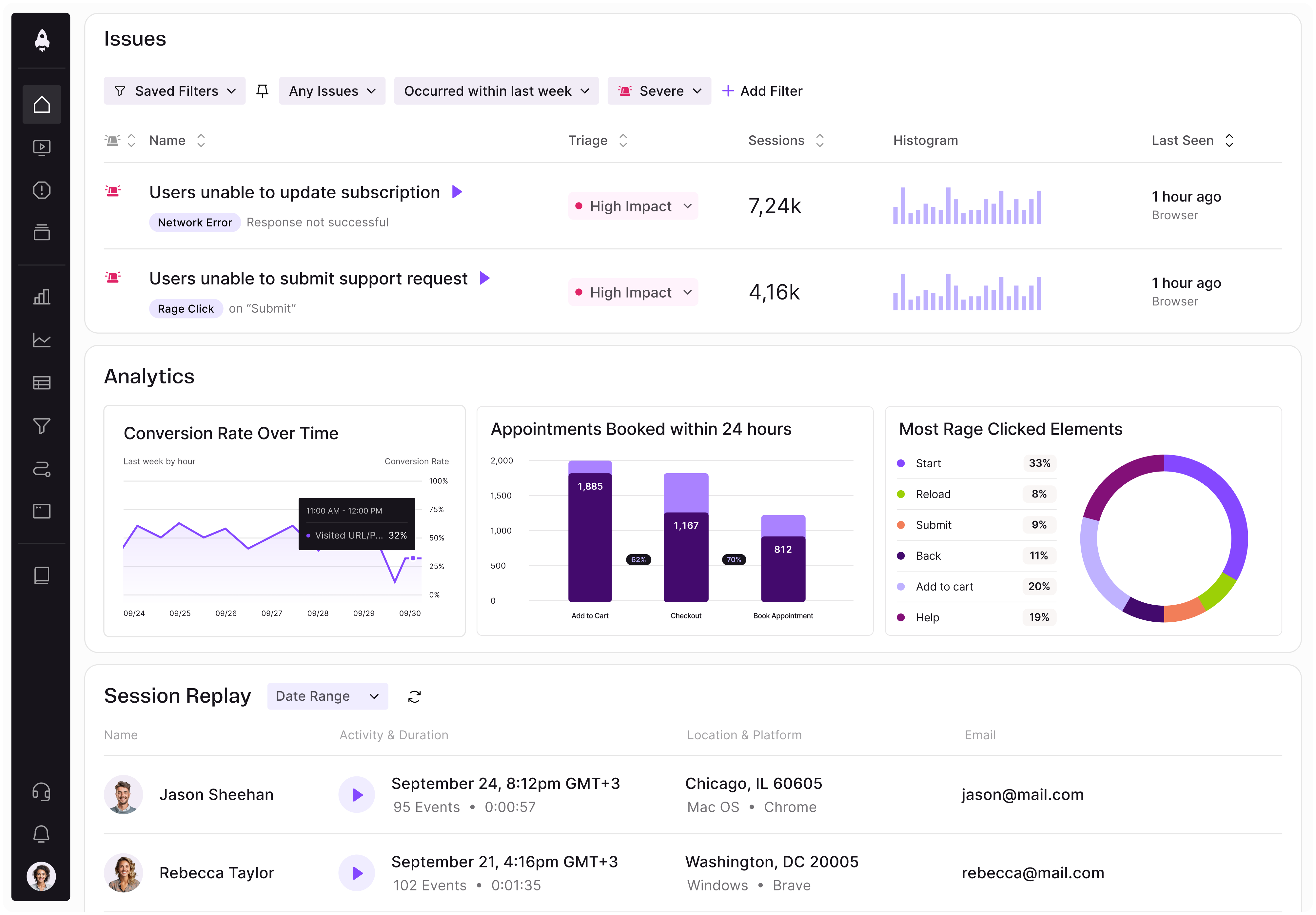
LogRocket identifies friction points in the user experience so you can make informed decisions about product and design changes that must happen to hit your goals.
With LogRocket, you can understand the scope of the issues affecting your product and prioritize the changes that need to be made. LogRocket simplifies workflows by allowing Engineering, Product, UX, and Design teams to work from the same data as you, eliminating any confusion about what needs to be done.
Get your teams on the same page — try LogRocket today.

Learn how product managers can design products for both humans and AI agents with reliable APIs, permissions, errors, and workflows.
See how a cloud storage PM uses LogRocket’s MCP to power Otto, an internal tool that flags bugs and tracks feature adoption automatically.
Learn how much AI fluency product managers need, which skills matter most, and why human judgment remains their competitive advantage.

Add a harm score to product prioritization to catch severe user consequences that RICE and other frameworks can miss.


 Learn more →