
Learn how to make visual regression tests easy and fast with Argos CI, an automation tool that compares screenshots during build time.

Learn how to implement more accurate tests in your Go application by using advanced patterns like mocking, test fixtures, test helpers, and golden files.

Writing unit tests ensures that each unit of code is working correctly, increasing the chance that your application as a whole will function as planned.
Can AI refactor legacy CSS without breaking your layout? We benchmarked 5 top AI assistants across cascade order, specificity ties, and stacking traps.
Where AI appears in your interface can shape how users discover, trust, and adopt it. Learn the strengths of common AI UI placement patterns and how to choose the right one for your product.
Meta’s Astryx ships an MCP server and component manifest so agents query real APIs. We tested it against shadcn/ui with Claude Code across three real UI builds.

UX testing is not limited to layouts, copy, and visual design. Full-stack and server-side experiments help teams evaluate how backend logic, APIs, algorithms, and product flows affect the overall user experience.

In A/B, A/B/n, or multivariate testing scenarios, using p-value with traditional null-hypothesis-based statistical analysis is so common, and most designers […]

Learn how to test Nuxt apps with Vitest, @nuxt/test-utils, runtime mocks, server route mocks, and Playwright e2e tests.

Traditional A/B testing splits traffic evenly, but multi-armed bandits dynamically send more users to the better-performing version. Here’s how the method works, where it helps, and when UX teams should use it over classic A/B testing.

AI agent simulations promise faster, lower-risk UX testing by replacing real users with AI-simulated personas. Here’s how the method works, where it falls short, and when designers should rely on simulated users versus real user testing.
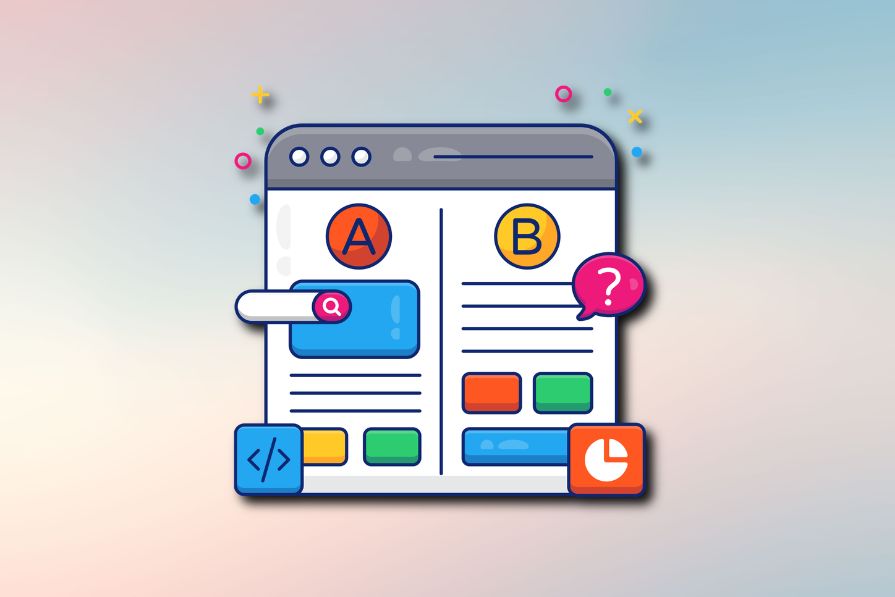
A/B testing is great for comparing two versions of a design, but multivariate testing helps teams evaluate multiple design element combinations at once. Here’s how both methods work, how they differ, and when UX teams should use each one.