To no one’s surprise (thank you, leaks), the iPhone Duo launched on September 9 at $1,999. As usual for Apple products, the Duo has already received lots of hype and praise. Before the preorders were even available, analysts at TrendForce expected it to grab roughly a quarter of the foldable market in its first year alone.
That sounds like an amazing success until you look at the data more carefully. The entire foldable market is forecasted at around 20 million units in 2026. For scale, the world buys well over a billion smartphones a year.
With that in mind, the category Apple just “conquered” only represents around two percent of all phones sold. It’s also important to add that the foldable segment is only growing this year because Apple showed up. Strip Apple out and Android foldables are projected to shrink by more than twenty percent.
I’ll admit up front that I’m skeptical of the Duo, the same way I was skeptical of the Vision Pro, but not because Apple executed poorly. The screen is gorgeous, the software work is real, the form factor looks well designed, and it’s a solid foldable phone that builds on years of competitors’ experience.
I’m skeptical because I keep asking myself the product manager’s basic question, which isn’t “Is this impressive?” but “What problem does it solve?” For that, I don’t have a good answer.
So let’s use Apple as the excuse to talk about the thing that actually matters for the rest of us: how do you tell genuine product innovation from technical novelty? Because your roadmap is full of that exact decision, even if none of it folds.
In product management, technical and product innovation often get treated as interchangeable terms, and they’re not even close to each other.
Technical innovation is when you build something difficult. A folding glass screen with a barely-there crease is something we didn’t even see on Star Trek. It’s genuinely a move that was not foreseen by sci-fi writers of old.
Product innovation, on the other hand, occurs when you solve a real problem for users better than the alternatives. That’s why Captain Kirk held a bulky iPad in the late 60s show. A “book” that holds all your books, documentation, and live reporting is something that actually addresses real challenges.
The trap, for Apple and for you, is that technical innovation is thrilling to build and easy to demo. Because of this, it’s very tempting to mistake it for the product.
I know this temptation firsthand. ChatGPT was released while I was working at Skype. When this happened, we quickly set aside all our backlog plans and jumped onto integrating LLM functionality into our now-retired communicator any way possible. We were so excited by the possibilities that we never stopped ourselves to ask whether we should.
So, to go back a step, you can spend a year shipping something remarkable and still ship nothing anyone needs.
How can you prevent this mistake? Use the “jobs to be done” framework, or in this case, more of a philosophy.
Jobs to be done asks a surprisingly simple question: what does someone actually hire this product to do for them?
The classic example is that a hardware store doesn’t sell a hammer to drive a nail. It sells the possibility of making your home more beautiful (due to the picture you hang).
For a regular smartphone, the list is enormous:
Basically, you can hold a solution to most of your daily challenges through one app or another.
With the foldable, the honest question is narrower: What job does the big inner screen uniquely do that the phone in your pocket doesn’t already do well enough? The sales pitch answer is multitasking and immersive media. So basically everything the phone does, but… better?
And here’s the shaky part. That job is real, but it belongs to far fewer people than the demo implies. Sure, holding a phone may look amazing and really give you additional space that you need for work, or a better screen on the flight.
But guess what? If you really want a bigger screen and want to multitask, your laptop does that way better than any phone.
Yes, it doesn’t fit in your pocket, but do you really get that much real estate to justify the large bill for the innovative product?
That’s the tell. A big screen is a technical answer to a job most people don’t have often enough to change their phone over.
You don’t have to look far to see what happens with devices that have impressive demos or concepts but aren’t fundamentally what users want or need. The recent wave of AI hardware has some great examples.
Humane’s AI pin was a spectacular piece of engineering. It was a screenless, voice-first wearable with a laser projector, built by ex-Apple people, and backed by around $230 million. It shipped fewer than ten thousand units before Humane sold to HP for $116 million and the pin was switched off for good.
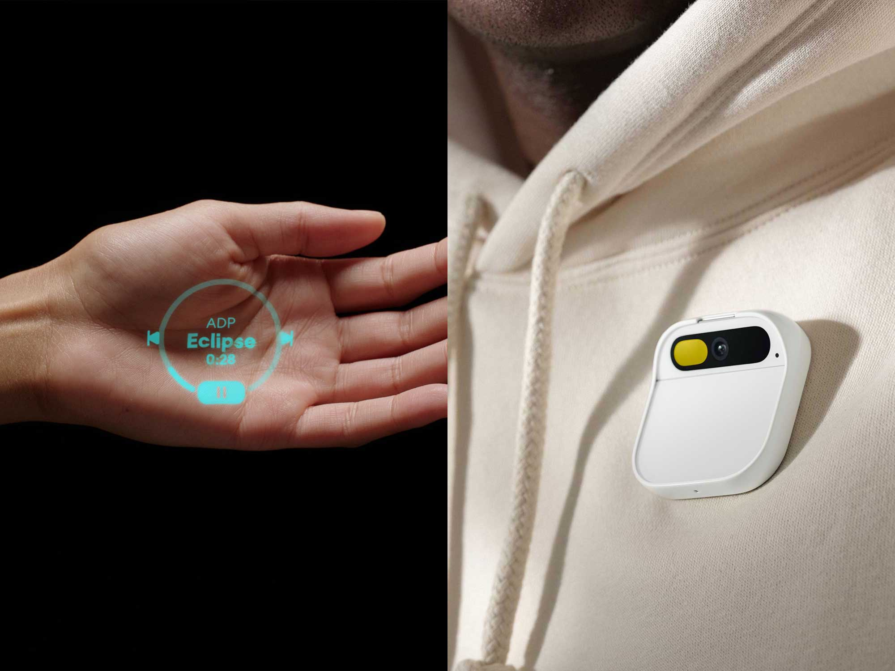
Similarly, the Rabbit R1 was cheaper and cuter and sold about a hundred thousand units on hype, then watched the overwhelming majority of buyers abandon it within months.
Both were technically novel and sounded exciting in the early pitch previews. Both failed the jobs-to-be-done test for the same reason: they asked people to adopt a brand-new behavior.
Literally, you needed to carry a second gadget. That’s an enormous ask, and the reward for making it was a device that did a handful of things your phone already did better. Moreover, it turned out that the dedicated hardware was a gimmick to begin with.
Now the counterexample. Over the same stretch, EssilorLuxottica and Meta sold more than seven million Ray-Ban smart glasses in a single year, more than triple the total sold in the previous two years combined.
Not a hard sell to a niche. A genuine consumer hit. And a controversial one, given the public outcry over the privacy violations, but a hit nonetheless.
Why did glasses win where the pin died? Because the glasses didn’t ask anyone to adopt a new behavior. People already wear sunglasses, take photos, and ask their phone questions.
The glasses slid into a behavior that already existed and made it slightly more convenient.
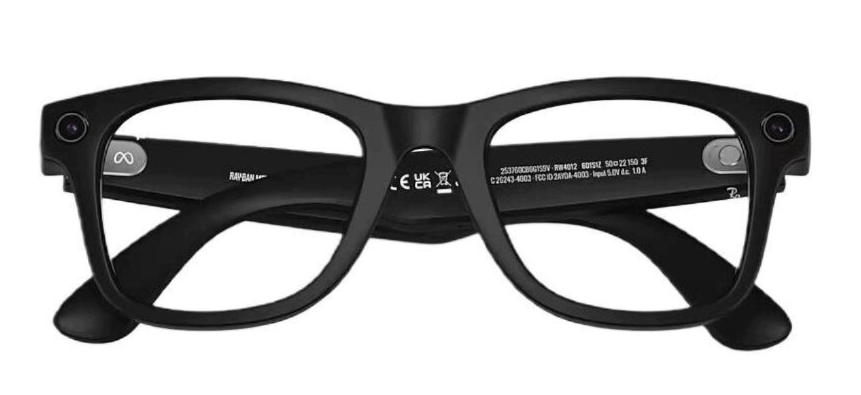
Still, if you watched the Black Mirror episode where similar technology was compressed into contact lenses, it would give you “the creeps.”
Here it goes: Never invest heavily in a new product without being laser-focused on the problem you’re solving.
Ray-Ban glasses allowed easier access to the tech we’re already using: Users can record audio/video and get information without pulling their phone out of their pocket and losing focus on their surroundings.
If the glasses tell me what’s in the email I just received, I don’t need to put my phone in front of my face.
On the other hand, Humane’s pin did everything that the ChatGPT and Gemini apps could do, but required users to carry a dedicated device.
So… Does the iPhone Duo solve a real user problem?
Well, that’s not super obvious, and that’s why it’s more interesting than the pin. As “a phone that occasionally becomes a small tablet,” the fold improves a behavior people already have, since wanting a bigger screen can be real.
That part is Ray-Ban-shaped, and it’s probably why the Duo will do fine where the Vision Pro didn’t. But the productivity story, the side-by-side multitasking that justifies the size and the price, asks for a new behavior most people don’t need to adopt. That part is Humane-shaped.
My read is that the Duo survives on the first job and gets oversold on the second. It’s a nicer phone that folds, not a new way of working.
It’s probably a niche device for foldable enthusiasts, who make up a tiny minority of the market. But is the minority big enough to warrant the device in the first place?
Only time (and sales data) will show. It just isn’t the revolution the keynote implied, and at two thousand dollars, it’s a tough sell for the typical Apple ecosystem user.
Now, the part that actually touches your job, because you’ll almost never launch a foldable, but you’ll constantly get asked to support one.
“Can we make sure the app looks great on the fold?” “Should we build the glasses?” “Let’s add a tablet layout.”
Same decision, smaller stakes, and it eats real budget. Before you say yes, walk through these key questions with your team.
Not: “Would it be nice?” What specific job does the new form factor let your users do better, and what share of your actual base needs that job done?
If the honest answer is a low single-digit sliver, that changes everything downstream. It’s a similar problem to creating a version of the app for a watch: it’s doable, but is it worth it? Usually, it’s not.
If supporting the form factor just makes an existing behavior smoother, the odds are decent.
If it depends on your users adopting a new habit first, you should be very skeptical, because you’re now betting on the hardest thing in the product.
This is where people lie to themselves. “Adaptive layouts” aren’t a function you add to your code, copy-paste style.
A foldable means designing and testing folded and unfolded states, the transition between them, and fold continuity so the user doesn’t lose their place mid-action. It means a bigger QA matrix, more edge cases, more regressions, and a design system that now has to flex in ways it didn’t before.
That cost is permanent. It’s paid on every feature you ship from now on, not just once.
Every sprint spent perfecting the experience for two percent of the market is a sprint not spent on the other ninety-eight.
That’s the real question, and it’s rarely the one that gets asked in the excitement of a shiny new device.
You usually don’t have to choose between “ignore it” and “fully embrace it.” Make sure your app doesn’t break on the new form factor, ship the boring baseline, and watch whether those users actually do anything different.
Let real behavior, not the keynote, tell you whether the deep investment is worth it. Buy the option before you buy the whole thing. Perhaps adapting the iPad version of your app, 1:1, is simply an easy way to achieve the goal?
None of this means never supporting a new form factor. It means supporting it with your eyes open, for a job you can name, at a cost you’ve actually counted.
The foldable iPhone is a beautiful piece of engineering. That said, I still think it was released a year or two too early and aimed at a job most people don’t have. That’s not an Apple problem. It’s the oldest trap in product, and Apple is just the most expensive current example of it.
As you can see, there’s a lesson there. In your line of product development, you might be tempted to build something because it’s cool, or innovative, or the competitors did it.
Still, the discipline needs to kick in every time. Ask what job it does. Ask how many people have that job. Ask whether you’re improving a behavior or inventing one. And count the real cost before the demo talks you into it.
Technical novelty is easy to admire. Product innovation is the boring, harder thing where you actually help someone. Don’t confuse the two, no matter how good the animations are.
Thanks for reading. Looking forward to seeing you in my next piece.
Featured image source: IconScout

LogRocket identifies friction points in the user experience so you can make informed decisions about product and design changes that must happen to hit your goals.
With LogRocket, you can understand the scope of the issues affecting your product and prioritize the changes that need to be made. LogRocket simplifies workflows by allowing Engineering, Product, UX, and Design teams to work from the same data as you, eliminating any confusion about what needs to be done.
Get your teams on the same page — try LogRocket today.

Explore agentic AI security trade-offs product managers must own before launch, from permissions and human oversight to memory and recovery.

See how to define AI features that deliver user value. Validate needs, assess costs, and set reliability requirements before the team builds.
Learn how to read a P&L statement, assess product costs, build stronger business cases and align product roadmaps with financial priorities.
Learn how product managers can design products for both humans and AI agents with reliable APIs, permissions, errors, and workflows.


 Learn more →