Recently, I found myself staring at a box of blue nitrile gloves in a doctor’s office and thought about snagging a pair. I love the color, but I also like the fit and snap, which triggered a visceral memory of the Blink-182 album cover.

It got me thinking about how a doctor’s office actually works. If a doctor ran the front desk, took vitals, performed X-rays, handled referrals, dealt with insurance, and did the paperwork, they’d only have time to see a few patients each day. They wouldn’t have time to advance their craft, and they certainly wouldn’t do their best work.
Instead, a doctor’s office organizes work so the doctor can focus on patient care. Delegating tasks doesn’t mean the doctor avoids other responsibilities. It means the organization depends on the doctor to apply their expertise where it matters most.
The same principle applies in sports. When teams face gaps in their offensive or defensive lines, they do not ask the quarterback to fill them. A quarterback cannot play wide receiver, kicker, tight end, and defensive lineman while also reading the field and executing key plays.
In the workplace, many people ignore this principle. High performers step in wherever gaps appear. Over time, this behavior creates exhaustion, bottlenecks, and teams that struggle to scale.
As a product manager, you can fall into this pattern without realizing it. You might respond to every issue and absorb work that lacks a clear owner. This causes you to start to equate being busy with being effective.
Good leadership comes down to judgment, not coverage. You have to choose what deserves your attention and what doesn’t. When PMs avoid making those calls, they take on too much, slow their teams down, and sacrifice long-term progress for short-term relief.
Think about your body. Your muscles grow stronger through stress and recovery. It works the same way for organizations by applying disciplined focus.
Imagine one of your favorite sports teams. They perform because they have clear goals, expert coaching, and they each bring their unique skill sets to the team to make them stronger as a whole. Sure, occasionally there’s an all-star player who makes a few stellar moves to help win a game, but on the whole, the team is judged by their collective performance, not the heroics of one.
When these athletes are training, they go through cycles of consistent, progressive challenge, which strengthens them physically and mentally. It wouldn’t be realistic to expect these athletes to be constantly game-day ready. That would cause overtraining, with no opportunity for recovery. The athletes would burn out, and the team would fall apart.
Sure, there’s always another athlete to replace those lost, but part of the magic in team performance is the shared experiences and culture that naturally develops over time, which is aided by the longevity of relationships.
Building stronger muscle requires targeted strengthening, pressure testing, and recovery. In a muscular system, when one muscle is weak, the other muscles compensate, which leaves you unbalanced.
Those of us in startups understand the constant dilemma: Our natural proclivities are to support anything that needs doing, but this is unsustainable and leads to burnout and resentment. It’s also a disservice to your organization. By plugging the holes, you are sacrificing long-term strength and health for short-term success.
Ask yourself, if you weren’t there, what would happen?
Others would share the load, or it wouldn’t be prioritized. Sure, some things might fail, but that would be an indication the team isn’t ready to handle them, and they’d either structure things differently to achieve those goals, or they’d acknowledge those goals are too advanced for the current org setup.
If a ship’s captain starts plugging holes in the boat due to a lack of necessary sailors onboard, who’s looking out for the icebergs? This exists at all levels of leadership, not just the captain level. Each of us has a responsibility to understand our roles, clarify what the company needs from us, challenge assumptions and distractions, and execute.
If something around you isn’t properly resourced, it shouldn’t be an automatic, unspoken cry for help. You don’t need to save the day. It’s a chance for you to step back, stay focused on your role, and, if something fails, recognize that it’s not your fault.
If someone asks you for support, go for it. But first, clarify and communicate what you will set aside from your bucket of priorities.
Consider the situation where you constantly fight fires, stepping up to help whenever needed to get things across the line. People don’t know everything you’re doing, the underlying root processes or problems aren’t fixed, and when the tiny issues compound, it reaches a breaking point. When you have systemic problems, you don’t need Band-Aids, you need surgery:
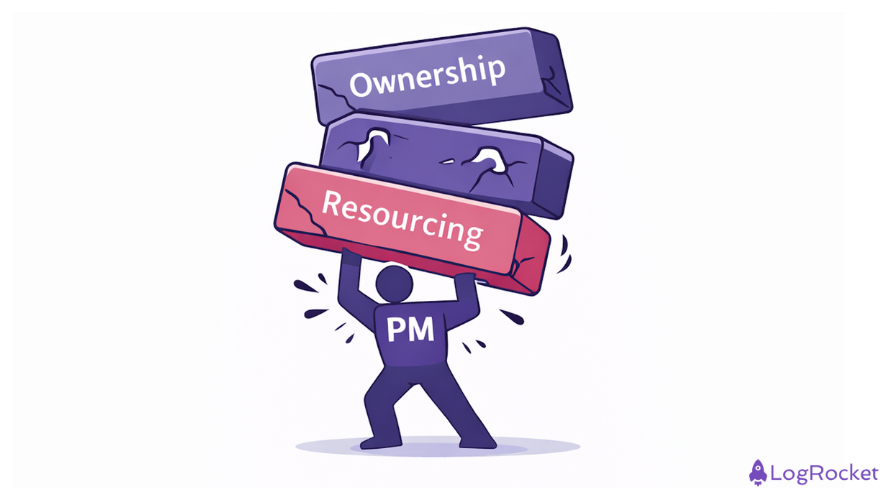
No one learns to step up when you’re always stepping in. By knowing it all, you’re creating a single point of failure, which limits your team’s ability to scale. Plus, crisis mode prevents creative thinking.
To build your team’s problem-solving muscles, give them the opportunity to respond to new situations together, and trust them to figure it out. Challenge them, embrace the silence (don’t answer all their questions, don’t offer solutions), and watch them grow.
As a leader, one of your key goals is to simply coach your team. Not to do the work. Not to prove yourself to others who don’t understand or appreciate you.
Coach your team and prepare the next wave of leadership, giving people opportunities to grow their careers while pushing them beyond their comfort zones to develop into their top potential. To make adequate time for that, you need to learn to say “no” to the little things.
If you suspect you may be playing too many roles, you probably are. Here are a few clear indicators
When you feel overloaded, which you inevitably will from time to time, or when leadership asks you to take on new work you hadn’t anticipated, you can either plan a buffer into your day to accommodate this unplanned work, or you can respond with options. Consider a junior-mid-senior framework for this approach:
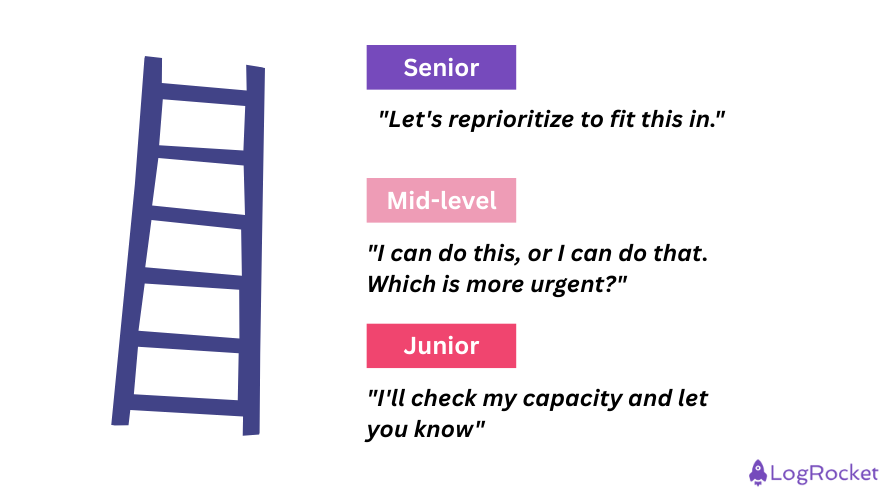
Notice how here you’re not saying “no” to anything. You’re just saying, “not now.” You’re also forcing the decision of prioritization back on leadership so they understand not everything can be accomplished by two hands.
If they want it all now, they can commit more resources, or reduce the scope, or provide more time to achieve the task. At an individual level, it’s not always your decision to make, although you can certainly make recommendations. When leadership buys into the decision making process, they cannot fault you for the priorities you pursue.
Do less to drive more. Take responsibility for the outcomes you own. Say “no” to everything else. Delegate what you can, and if there’s still too much, offer resourcing options to senior leadership.
Remember, you’re not there to please everyone. You’re there to fulfill a job specification, which has a clear definition and annual goals. It’s your responsibility to say “no” to anything that doesn’t align. If you’re always pleasing in lieu of achieving, you have no one to blame but yourself.
Performing at peak capacity constantly isn’t only an unfair expectation, but a recipe for disaster. Provide time for recovery, just like an athlete would recover from a heavy training session in preparation for a big game day. This might look like an innovation sprint (team is empowered to work on what they please), or it might look like a moment of reflection, sharing key wins from the year with the company.
It’s ultimately your responsibility to practice this regularly for yourself, and model that good behavior for your team. Block some “recovery time” in your calendar, even if it only totals one hour a week. Use it to read innovative articles, consider your strategy, or review new materials the team has compiled.
This isn’t about being unavailable or refusing to help when things get hard. As a product manager, being a good teammate still matters. The shift is in how you apply your energy, by focusing your unique product skills on a small number of priorities where your impact is disproportionate to the effort.
When product managers operate with this level of focus, the noise starts to fall away. Effort becomes more intentional. Recovery is no longer an afterthought. Over time, this discipline replaces chaos with strength and builds an organizational muscle that is resilient, balanced, and capable of meeting whatever challenge comes next.
Featured image source: IconScout
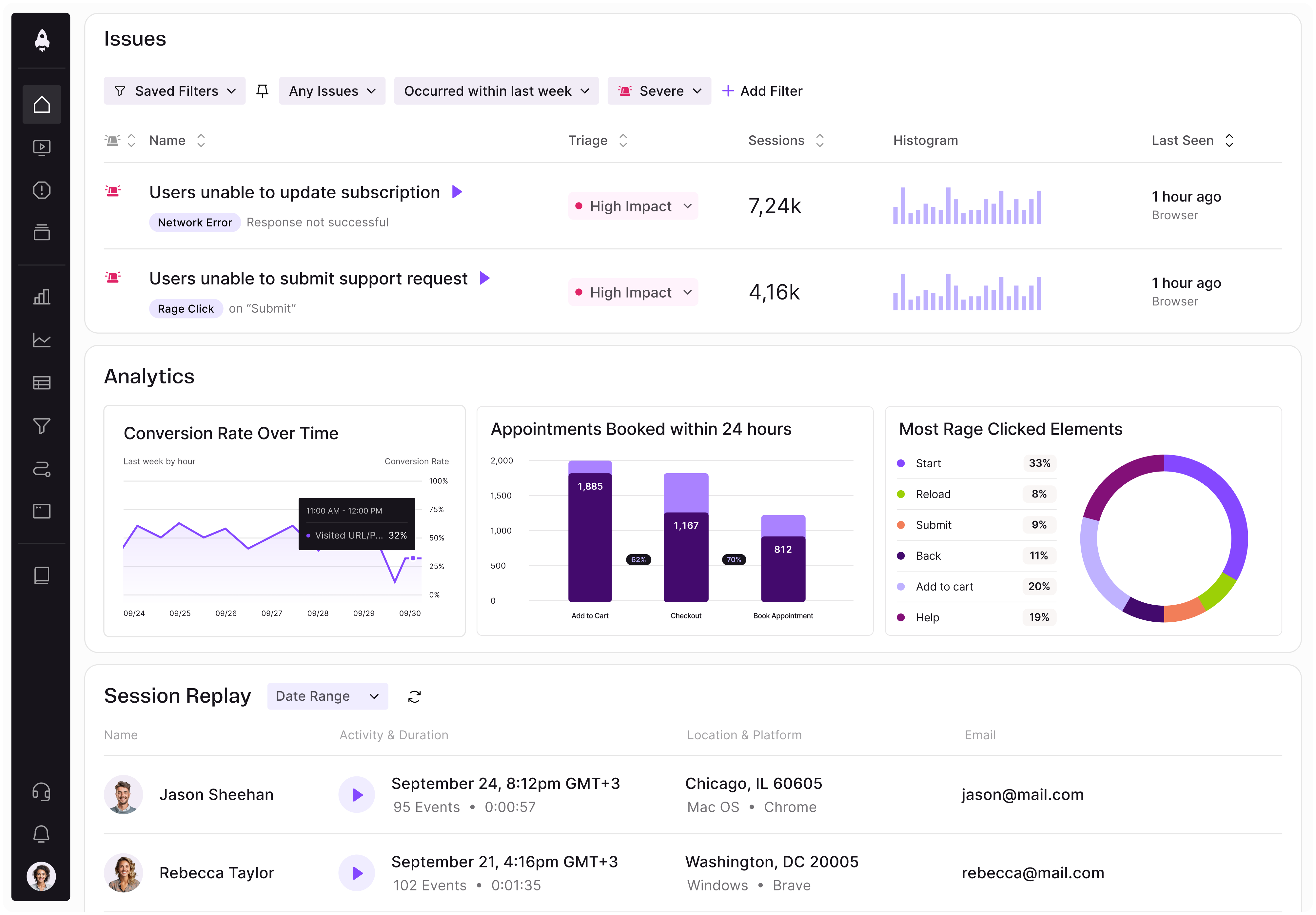
LogRocket identifies friction points in the user experience so you can make informed decisions about product and design changes that must happen to hit your goals.
With LogRocket, you can understand the scope of the issues affecting your product and prioritize the changes that need to be made. LogRocket simplifies workflows by allowing Engineering, Product, UX, and Design teams to work from the same data as you, eliminating any confusion about what needs to be done.
Get your teams on the same page — try LogRocket today.
A practical framework for product leaders to prioritize better, reduce noise, and focus teams on what matters most.

Explore how urban planning helps product managers think in systems, strengthen foundations, and build products that scale well.

Learn how product managers can move from output tracking to outcome-driven product management with metrics tied to user impact.

Learn how to spot PMF erosion early, diagnose the cause, and help your product recover before decline turns into panic.


 Learn more →