In 1931, Neil McElroy of Procter & Gamble wrote a memo proposing a role fully responsible for a product’s success. His vision was product-centric ownership, a sharp contrast to the top-down functional organizations of the time.
Over the decades, that idea evolved. Product management moved from overseeing physical goods in the mid-20th century to becoming a cross-functional, software-driven role in the 1990s, shaped by companies like Microsoft and Apple. The focus of the role was clear: bridge the gap between engineering and marketing.
Since then, the scope of product management has continued to expand. PMs started working closely with design, customer support, operations, sales, and executive leadership. Frameworks multiplied, tooling improved, and entire libraries were written about roadmaps, prioritization, discovery, and stakeholder alignment.
Then in 2022, something shifted. ChatGPT was released, and product management, like many professions, entered a new phase.
Some predicted product management would disappear entirely. Others assumed it would simply adapt and carry on. But the reality looks more subtle than either camp imagined. The “management” layer of the role has started to shrink, and in its place, a new expectation has taken hold: product managers as builders.
In this post, I’ll explain why the shift from product manager to product builder is accelerating and what you can do to stay ahead of it.
Software products have traditionally required multiple teams to ship. At a minimum, engineering writes the code and design shapes the experience, while product managers coordinate the work across functions.
That boundary is now starting to blur. With tools powered by ChatGPT and other large language models (LLMs), building a product has become more accessible. Writing functional code, generating UI patterns, and spinning up prototypes no longer requires the same level of specialization they once did.
Are these tools always production-ready? No. But they meaningfully reduce dependency on engineering and design during early validation and experimentation. That shift is where the product builder emerges.
A product builder is someone who can take an idea from zero to one with minimal dependency on other teams. This doesn’t mean working alone. It means having the ability to move an idea forward without waiting for perfect resourcing.
You can think of this as someone who can talk directly to customers and test their riskiest assumptions. They validate solutions by building small prototypes, ship an initial version of a product or feature, and analyze usage data to iterate quickly.
This doesn’t mean product builders replace engineers or designers. They still collaborate with specialists, but the dynamic changes. Instead of requesting execution, they contribute through execution.
The shift is from authority-based influence to capability-based influence. In the traditional model, a PM’s influence often came from roadmap ownership and cross-functional coordination. In the builder model, influence comes from demonstrated output.
This is a fundamental shift in how product managers operate. It requires broader skills and deeper ownership, but it also unlocks autonomy. You’re no longer fully dependent on other teams’ bandwidth or priorities to create progress.
Traditionally, product managers have depended on engineering and design for execution. The PM, design, engineering trio has long been the foundation of modern product teams, with clearly defined boundaries and responsibilities.
For decades, the model was simple. PMs decided what to build, designers shaped how it looked and felt, and engineers determined how it worked. The structure was built around specialization and handoffs.
But if PMs can now prototype, write functional code, and generate interface concepts using AI tools, the dependency model starts to shift. The question is no longer whether PMs can build, but how that capability changes team dynamics.
Personally, I don’t see this as a threat. I see it as an opportunity to empower PMs to move faster and validate ideas independently. This doesn’t mean PMs can or should replace engineers or designers. Instead, you can build early prototypes and test with customers before formal resourcing is required.
That speed changes everything. Instead of waiting for a sprint allocation, PMs can validate assumptions in days. Instead of debating hypotheticals, teams can react to something tangible.
The best product teams in 2026 will be organized around outcomes. A product builder might create the first version of a feature, then collaborate with a senior engineer to make it scalable and production-ready.
Similarly, designers may use AI tools to generate multiple directions quickly, then refine alongside a builder who has already tested early concepts. The relationships become more fluid and collaborative, with shared ownership over results rather than rigid role definitions.
However, this shift will require ego adjustment. If you’re a PM who has always been the decider, you need to become comfortable contributing instead of directing. If you’re used to controlling the roadmap, you need to accept that influence increasingly comes from capability, not title.
As product managers evolve into product builders, the skillset has to follow. This shift moves away from managing work toward executing, validating, and learning faster. Building that foundation means developing hands-on capabilities across four core areas: technical literacy, design fluency, data fluency, and customer insight.
As a modern product manager, you need to understand how software works. You should be able to read code at a high level and recognize how systems connect, where data flows, and what might break.
The real skill is knowing what to ask, how to prompt AI tools effectively, and how to iterate when the first output isn’t quite right. Tools like Claude or Codex can explain unfamiliar code in plain language, but only if you know what you’re looking for.
Action item: Pick a small project such as a landing page, a simple calculator, or a form that writes to a database. Build it using an AI coding tool, then read through the generated code and ask questions about it. You’ll learn more in a weekend of building than in months of passive tutorials.
You don’t need to become a visual designer, but you should understand why some interfaces feel intuitive while others feel frustrating.
Learn the basics of hierarchy, spacing, typography, and interaction patterns. Spend time in Figma understanding frames, components, and layout systems so you can translate ideas into tangible prototypes.
You want to be able to create prototypes with enough clarity that designers can elevate them, not reinterpret them from scratch.
Action item: Take a feature you use often and identify a friction point. Redesign it using prototyping tools and LLM support, focusing on clarity and usability rather than aesthetics.
Product builders don’t wait for analysts to answer every question. They know how to pull their own data, explore metrics, and identify patterns in user behavior.
Learning basic SQL changes how you operate. When you can query data yourself and build simple dashboards, you reduce bottlenecks and make faster decisions.
Action item: Generate a synthetic dataset for an imaginary product using an LLM. Write basic SQL queries to explore user behavior, identify trends, and surface insights. Practice turning those insights into product decisions.
This part hasn’t changed. Understanding users, their pain points, language, context, and motivations remains foundational.
What has changed is the speed of execution. When customer insight meets builder capability, you can move from research to prototype in hours instead of weeks. This enables you to test assumptions instead of just debating them.
Action item: Interview five to ten users while actively building. Use AI tools to organize and synthesize insights, then translate those insights into quick experiments. Compare your intuition, user feedback, and AI interpretations to sharpen your product judgment.
A traditional product trio typically includes one product manager, one to two designers, and four to five engineers. The PM defines the problem and roadmap, designers create mockups, and engineers build the solution. From idea to shipped feature, the discovery-to-delivery cycle often takes three months, and in complex B2B environments, it can stretch to a year.
Now consider what changes when the PM can build.
When a PM can prototype and validate independently, ideas are tested earlier. Engineering and design effort is applied later, after evidence exists. That shift alone materially changes cost structure and speed.
A typical product trio in a major tech hub costs roughly:
That totals approximately $1,000,000 in salary alone. Once you add benefits, tooling, and overhead, the annual cost rises to $1.2 to $1.5 million for a single product team.
Industry research consistently suggests that 50 to 60 percent of shipped features fail to meaningfully move the metrics they were designed to impact. In traditional workflows, that failure is often discovered only after weeks or months of design and engineering effort.
Imagine a team shipping 12 major features per year. If seven underperform and each required six weeks of coordinated effort, that amounts to 42 weeks of work. At a conservative burn rate of $25,000 per week, the team has spent over $1 million building features that did not deliver value.
When PMs can prototype and test before full team allocation, three things shift.
First, time to first user feedback drops from four to six weeks to one or two weeks. That alone can triple the speed of learning.
Second, the number of ideas tested per quarter increases significantly. Instead of validating two or three initiatives, teams can explore six to ten, dramatically increasing surface area for discovery.
Third, engineering time spent on failed ideas drops sharply. If a traditional approach consumes 400 or more engineering hours before discovering a flaw, a builder model may reduce that to under 100 hours. Saving 300 engineering hours per quarter can represent roughly $30,000 in quarterly savings, depending on cost structure.
Most importantly, more ideas die before they reach full production. If 50 percent of weak concepts are killed at the prototype stage instead of 10 percent, the savings compound quickly. Preventing just five unnecessary builds per year can represent hundreds of thousands of dollars in avoided engineering investment.
In total, a strong builder PM can prevent $500,000 or more in wasted engineering effort annually.
The right AI tools compress timelines, lower technical barriers, and allow you to move from an idea to a working prototype in days instead of weeks.
Below are the tools I use regularly and recommend for PMs who want to operate with more autonomy and execution capability.
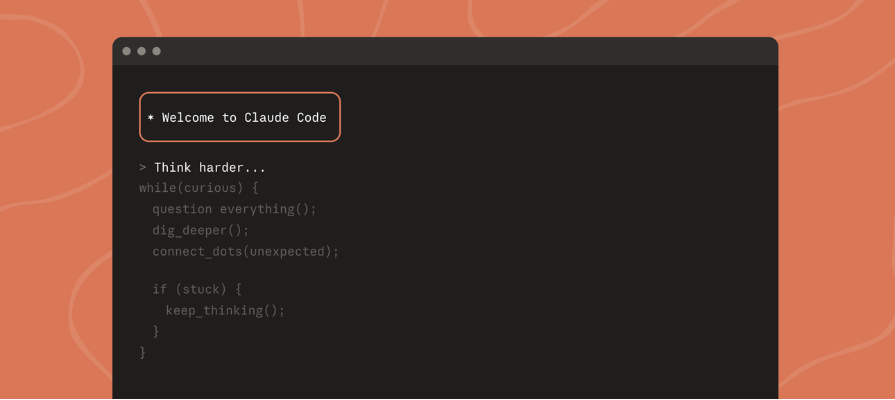
Use case: End-to-end product development support
Claude Code supports the full product lifecycle. You can break down requirements, explore technical approaches, generate and refactor code, debug issues, and pressure-test edge cases.
For PMs, the value extends beyond code generation. The real advantage lies in understanding system architecture, exploring tradeoffs, and iterating without waiting on engineering bandwidth.
Use case: Rapid prototype development
Lovable and Replit enable fast creation of functional prototypes. A product idea can quickly become an interactive flow without complex setup or infrastructure work.
Early validation becomes dramatically faster. Instead of presenting static mockups, you can put working experiences in front of users and collect meaningful feedback within days.
Use case: UI prototyping and interaction modeling
Figma Make accelerates interface creation. You can generate UI screens, test layout concepts, and experiment with flows without starting from scratch.
Design collaboration improves when conversations begin with tangible artifacts. Designers refine and elevate rather than interpret abstract ideas.
Use case: Research, synthesis, and data analysis
LLMs act as research accelerators. They support competitive analysis, customer insight synthesis, product spec drafting, experiment framing, and structured data exploration.
The speed of iteration changes how PMs think. Assumptions can be challenged, positioning reframed, and insights synthesized in minutes rather than hours.
By now, the age of the product builder has begun. Coding, prototyping, and designing software are more accessible than ever, and product managers are uniquely positioned to benefit from this shift.
With the right tools and skills, PMs gain independence. You can validate ideas earlier, contribute directly to execution, and create visible impact on team progress rather than operating as a coordinator.
This evolution expands the role. Product managers who embrace building develop stronger technical judgment, collaborate more effectively with engineers and designers, and build credibility through output.
I have already started building tools and deepening my understanding of software development. The learning curve is real, and so is the acceleration that comes with it.
If you work in product, now’s the time to lean in. The destination might not be totally defined yet, but the trajectory is clear: more autonomy, more capability, and more ownership.
Featured image source: IconScout
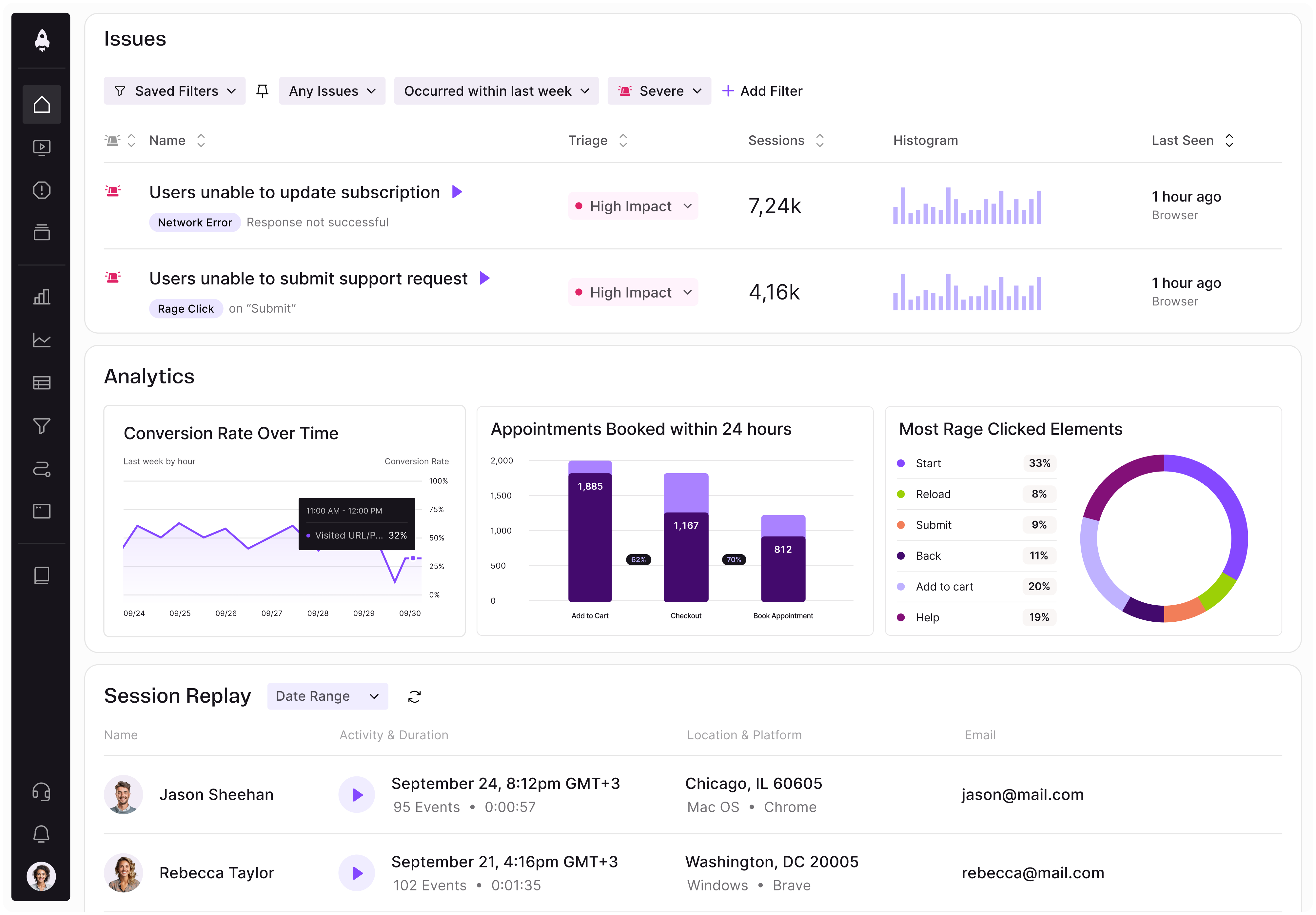
LogRocket identifies friction points in the user experience so you can make informed decisions about product and design changes that must happen to hit your goals.
With LogRocket, you can understand the scope of the issues affecting your product and prioritize the changes that need to be made. LogRocket simplifies workflows by allowing Engineering, Product, UX, and Design teams to work from the same data as you, eliminating any confusion about what needs to be done.
Get your teams on the same page — try LogRocket today.

Explore how urban planning helps product managers think in systems, strengthen foundations, and build products that scale well.
Learn how product managers can move from output tracking to outcome-driven product management with metrics tied to user impact.
Learn how to spot PMF erosion early, diagnose the cause, and help your product recover before decline turns into panic.
Introducing Ask Galileo: AI that answers any question about your users’ experience in seconds by unifying session replays, support tickets, and product data.


 Learn more →