Have you ever found yourself buying a new product, but forgetting why you chose that particular option? You had a wide range of less expensive alternatives that would have served your purpose, yet for some reason you felt like this product offered better value.

Sometimes you might think that a higher-tier product might provide more features and perks, or that the more expensive option has better longevity.
These are examples of selecting products based on their perceived value. As a product manager, it’s crucial that you comprehend the perceived value of your product so that you can develop products that better suit your target audience.
Ultimately, when done right, perceived value leads to greater customer satisfaction and product success.
In this article, you will learn what perceived value is, how it affects consumer behavior, and how you can use it to gain a competitive advantage over your competitors.
Perceived value is the worth, or benefit, that a customer believes they will receive from a product. The value is entirely subjective and depends on a customer’s individual needs, wants, and expectations.
Understanding the perceived value of your product is crucial for determining how much customers are willing to pay for it. If your product’s perceived value is high, customers are willing to pay a premium price for it; whereas if it is low, they will be hesitant, or only willing to purchase at a lower price.
To increase perceived value, you need to understand your customer’s wants and needs and create a product that meets or exceeds those expectations. This can be done by improving the product’s features, functionality, design, or customer service. You should monitor customer feedback and adjust the product’s features and pricing as needed.
While there’s no magic formula for perceived value, there are seven factors that consistently influence customer’s perception of your product:
The features and benefits of your product influence its perceived value. Customers are more likely to see a product as valuable if it offers unique features or benefits that are not available from other products in the market.
For example, someone may choose a smartphone with a high-end camera and health-monitoring features, over a similar smartphone with fewer features, even if the latter is cheaper.
A large part of the perceived value of your product comes down to quality. Customers tend to be willing to pay more for products that are high quality, durable, and reliable.
If someone purchases a high quality smartphone, with a robust build, and a reliable operating system, they are more likely to perceive it as having higher value.
The convenience of purchasing and using a product can also influence its perceived value. Products that are easy to use, require less effort, or are more accessible, can be perceived as having higher value.
Someone who is considering purchasing a smartphone may compare different options based on their convenience. One that is easy to set up, has an intuitive user interface, and is compatible with a wide range of apps and accessories might be perceived as having higher value.
The price of a product or service is often the most obvious factor that customers consider when evaluating its perceived value. Customers can perceive a product to be of higher value if its price is lower or if it provides more benefits at the same price point.
Someone may choose an unknown brand over a well-known one because it is significantly cheaper, even if the two products have similar features.
Customer service can change consumer’s perception of your products. Customers are more likely to see a product as having higher value if the company provides excellent customer service and support.
If a customer experiences an issue with their smartphone, such as a malfunctioning camera or a cracked screen, they may contact the company’s customer service team. If the team is friendly, knowledgeable, and responsive, the customer is more likely to have a positive experience.
A brand’s reputation and image have a significant impact on its perceived value. Customers tend to associate well-established brands with higher quality and value, leading them to be willing to pay a premium for a similar product.
Continuing with the smartphone example, this is why some customers might vow to only buy an iPhone, whereas others are perfectly fine settling for a cheaper, lesser known option.
Customers also judge a product based on its social influence. If a product is popular, or has positive reviews and recommendations from friends and family, customers tend to perceive it as having higher value.
Someone who is considering purchasing a new smartphone might check if a brand has positive reviews online or if their friends or family recommends it, which impacts their perception of the value.
Now that you know the key factors that influence perceived value, let’s explore how to measure it.
You can combine qualitative and quantitative methods to develop a more comprehensive understanding of your customer needs and preferences. Then, you can use this information to inform product development, marketing, and sales strategies:
Consider using user research methods to measure perceived value, such as in-depth interviews, focus groups, and customer observations. From these you can gather information about your customer’s perceptions and attitudes toward your product.
In-depth interviews can help you understand how customers use your product, the benefits they derive from it, and what could be improved.
Focus groups can provide a way to engage and receive feedback on product features, pricing, and quality.
Customer observations allow you to see how customers use the product in real-life situations, which can inform product improvements.
On the other hand, quantitative methods include surveys, questionnaires, and experiments.
Surveys and questionnaires provide insights into customer satisfaction, loyalty, and willingness to pay. These metrics can be used to identify areas where the product falls short.
Experiments are also a useful way to create a testing environment and collect real-life information about your product. You can use them to measure the perceived value of different product features, pricing options, or promotional strategies.
Returning to the phone example, a smartphone company may conduct an experiment to measure the perceived value of different pricing options for their new smartphone model. They may offer three different pricing options, each with different features and benefits, to a group of customers and then gather feedback on their perceived value of each option. This feedback can be collected through surveys, interviews, or other forms of feedback mechanisms.
Branding and marketing tend to play the largest role in shaping the perception of your product’s value. You should do the following to increase perceived value:
A strong brand identity helps you differentiate your product from competitors and establishes a unique value proposition. You can achieve this through a combination of visual branding elements (such as logos, colors, and packaging) and messaging (such as brand voice and tone).
Clearly communicate your product’s value proposition to your target audience so that they understand how you differentiate yourself from the competition. Highlight how your product is different and better than competitors, and how it meets customer needs and solves their pain points.
Provide an exceptional customer experience at every touchpoint, from pre- to post-purchase to build brand loyalty. This includes providing excellent customer service, simplifying the buying process, and providing after-sales support.
Lean on customer testimonials, reviews, and endorsements to demonstrate the value of your product. These build trust with potential customers and reinforce the perception of your product’s value.
Align incentives and promotions with your brand’s messaging and value proposition. Think about discounts, free trials, or exclusive offers to create a sense of exclusivity and urgency. These are especially important in the early stages of your product to drive traffic.
Listen to customer feedback and market trends and adapt your product accordingly. This helps you ensure that your product remains relevant and continues to provide value to customers.
Alongside marketing and branding strategies, pricing is an important aspect of product management and it has a significant impact on the perceived value of your product.
There are several pricing techniques that can enhance the perceived value of a product without increasing costs. Let’s look at a few examples:
This pricing strategy involves setting prices based on the value that customers perceive the product to provide. It focuses on the benefits that your product provides to the customer, rather than the costs associated with producing it. By setting prices based on the perceived value of the product, you enhance the perceived value without increasing costs.
Bundle pricing involves offering multiple products or services as a package deal. This strategy enhances the perceived value by offering additional benefits without increasing costs. Your customers may perceive a higher value in purchasing a bundle, rather than buying each product individually.
You can also use psychological techniques to influence customers’ perception of value. For example, using a “charm” price, such as setting a price at $9.99 instead of $10.00 makes your product seem more affordable. This gives the impression that your product is more accessible to customers.
Limited-time pricing involves offering a discount for a limited time period. It creates a sense of urgency and enhances the perceived value by making your product seem more valuable for a limited time. Because the offer isn’t always available, customers might buy now to avoid missing out.
Freemium pricing is popular in the SaaS world and involves providing a basic version of your product for free, while charging for additional features or a premium version of the product. It enhances the perceived value of the premium version by offering additional benefits without increasing costs.
Now that you understand marketing and pricing best practices, let’s examine how you can maintain and even improve perceived value over time. To this end, here’s five tips to keep in mind:
Many companies have succeeded in enhancing the perceived value of their products through various strategies. Below are four companies who successfully boosted their perceived value, alongside the strategies they used:
Dollar Shave Club disrupted the razor industry by offering high-quality razors at a low price, delivered right to your door.
They achieved this by using a subscription-based model. This model allowed them to reduce the costs of their razors and pass those savings on to their customers.
Never underestimate the power of comedy. Dollar Shave Club also created humorous marketing campaigns that emphasized the convenience and affordability of their service, which helped to differentiate them from other razor brands.
Toca Boca is a Swedish company that creates digital toys and games for kids.
They focused on creating apps that are not only fun, but also promote creativity and imagination. Their unique design and focus on play-based learning helped to set them apart from other children’s app developers.
Its success can be attributed to its strong brand identity, engaging storytelling, and focus on customer feedback.
Shiseido is a Japanese multinational personal care company that specializes in skincare, makeup, and fragrance.
They have been in business for over 140 years and are known for their high-quality products. Shiseido has successfully boosted its perceived value by emphasizing the use of natural and effective ingredients in its products.
They also focus on creating a luxurious experience for their customers through elegant packaging, personalized services, and immersive marketing campaigns.
M-Pesa is a mobile phone-based money transfer and financing service that was launched in Kenya in 2007.
They revolutionized the way people in these regions send and receive money, especially those without access to traditional banking services. By utilizing the power of mobile banking, they were able to reach an overlooked demographic and expand into more rural regions.
They successfully increased their perceived value by providing a secure, convenient, and affordable service, accessible to everyone with a mobile phone.
Perceived value is what customers believe they will receive from your product. The perceived value of your product differs from person to person, as it’s based on an individual’s needs, wants, and expectations.
Understanding perceived value is essential for product managers so that they know what customers are willing to pay for their product. You can do this through both qualitative and quantitative methods such as surveys, questionnaires, experiments, in-depth interviews, and customer observation.
To maintain and improve your perceived value, create a strong brand identity, communicate your value proposition clearly, focus on customer experience, leverage social proof, offer incentives and promotions, and continuously improve your product.
Featured image source: IconScout
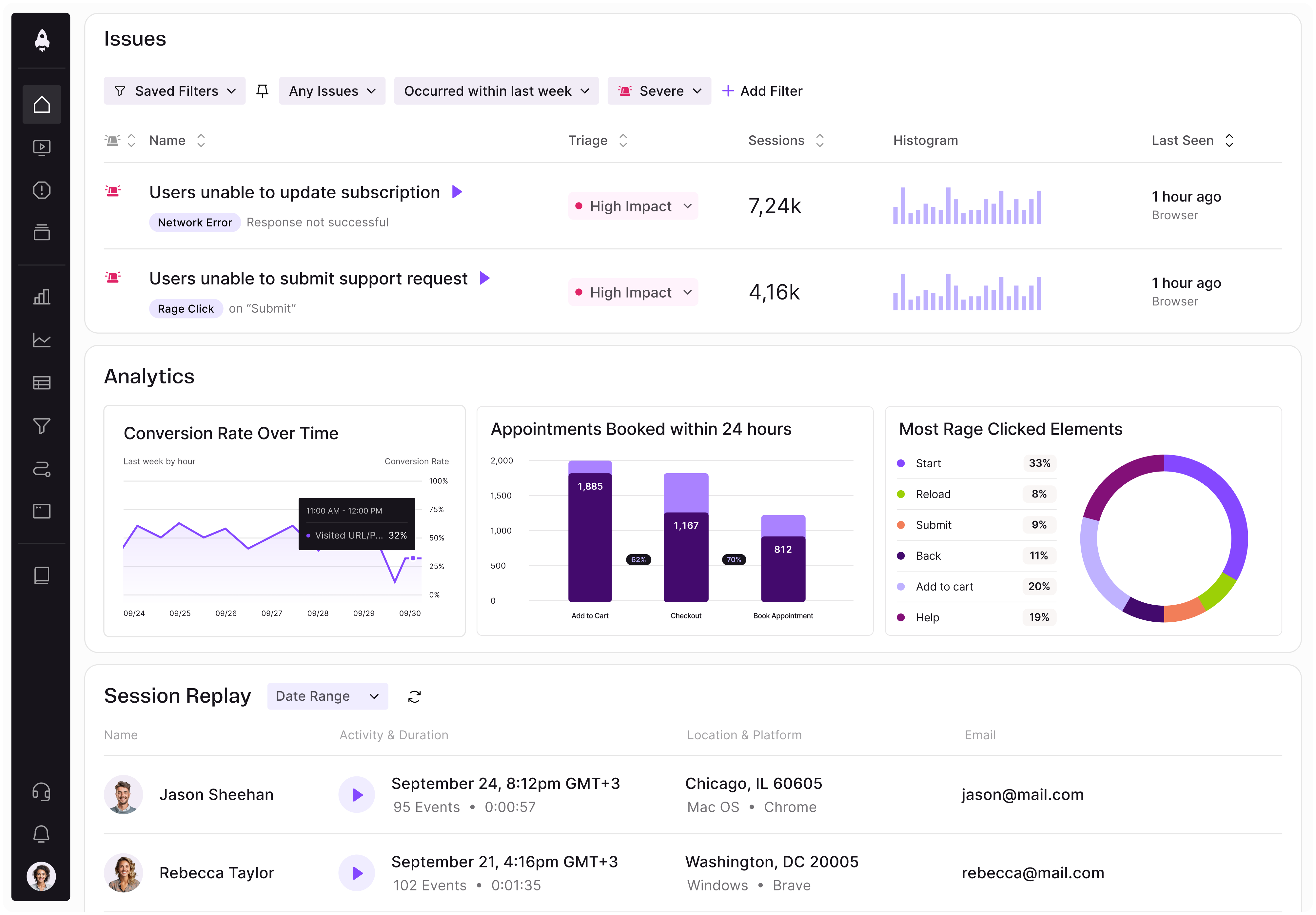
LogRocket identifies friction points in the user experience so you can make informed decisions about product and design changes that must happen to hit your goals.
With LogRocket, you can understand the scope of the issues affecting your product and prioritize the changes that need to be made. LogRocket simplifies workflows by allowing Engineering, Product, UX, and Design teams to work from the same data as you, eliminating any confusion about what needs to be done.
Get your teams on the same page — try LogRocket today.

Learn how to read a P&L statement, assess product costs, build stronger business cases and align product roadmaps with financial priorities.

Learn how product managers can design products for both humans and AI agents with reliable APIs, permissions, errors, and workflows.

See how a cloud storage PM uses LogRocket’s MCP to power Otto, an internal tool that flags bugs and tracks feature adoption automatically.

Learn how much AI fluency product managers need, which skills matter most, and why human judgment remains their competitive advantage.



 Learn more →