If you open LinkedIn on any given morning, you’ll find a sea of headlines like “Product Management is dead,” “Design is dead,” or “QA is dead.” It can quickly feel like the whole tech industry is one large graveyard.
As you keep reading, you learn that someone built an entire app overnight with three prompts, someone else replaced their whole discovery process with an AI agent, and a third person warns that PMs who don’t “master AI” by the end of the quarter will be obsolete.
It’s a lot. And if you’re a normal product manager doing normal product work, it can leave you in a state of panic. It’s as if you’re falling behind on something you can’t quite name.
So let me say the quiet part out loud: Most PMs don’t need to become AI experts. There’s no need to listen to all the doomsayers and attention seekers. You only need enough AI fluency to use the tools safely, challenge what they hand you, spot the real product opportunities, and talk to your engineers without nodding along to things you don’t understand.
Let’s break it down.
There’s a trap in the modern tech landscape: content that pushes more AI is good old-fashioned clickbait, not something designed to help your long-term career.
“You’re probably using AI about right” isn’t a viral hook. “90 percent of PMs will be replaced by people who use AI”s—or at least it was until it started to be played out.
You see the top one percent of demos, framed as the new baseline, posted by people whose job is to make you anxious enough to engage. You don’t see the thousands of PMs quietly doing great work with a sensible, boring amount of AI. They’re not posting. They’re working.
And it’s not only my fellow creators.
Google Omni promised so much at the last Google I/O. I dare you to try it and get a reality check. Let me just say that between the two poles of promises and reality, the distance is vast, to say the least (at least for an EU user).

The way out of this conundrum is to replace “Am I keeping up?” with a better question: “Is this actually making me a better PM, or just a busier one?”
Not all “knowing AI” is the same thing, and most of the anxiety comes from blurring three very different levels into one scary blob. Let’s separate them.
This is where you cut yourself away from the noise and evaluate the available AI tools with a clear head before choosing the ones that actually bring value to you. You use dictation tools, draft official emails and PRDs, summarize walls of text, and maybe make a funny AI image for your Slack discussion.
Regardless of what you choose to include in your daily flow, you don’t need to know how it all works. You just need to get good at using those tools until they become second nature, just like using PowerPoint before the AI era.
Here, you understand what these tools are good and bad at. You know when their confidence is misleading you, treat prompting as a real skill, and can sit in a room with engineers discussing an AI feature and contribute instead of just absorbing information.
You don’t build the models. You make good product decisions about them.
You own AI-native products. The model isn’t a helper on the side; it’s the core of what you ship. Now you genuinely need the deep stuff: evals, latency, cost curves, model selection, failure modes, the lot. This is a specialization, not a baseline, and treating it as the baseline is most of why everyone feels inadequate.
The mistake nearly everyone makes is assuming they need to be at level three when their job needs level two, if not level one. You’re being sold a specialist’s curriculum for a generalist’s job.
So let’s get specific about what level two actually requires.
This is the real syllabus. It’s shorter than you’d think, and almost none of it is technical.
LLMs are helpful with anything connected to language tasks: drafting, summarizing, adapting formats, etc. They’re not reliable or helpful at tasks that need facts, precise math, current developments, or actual reasoning about cause and effect.
If you didn’t know that before, you probably have now realized it’s a terrible idea to outsource your decision-making to that tech.
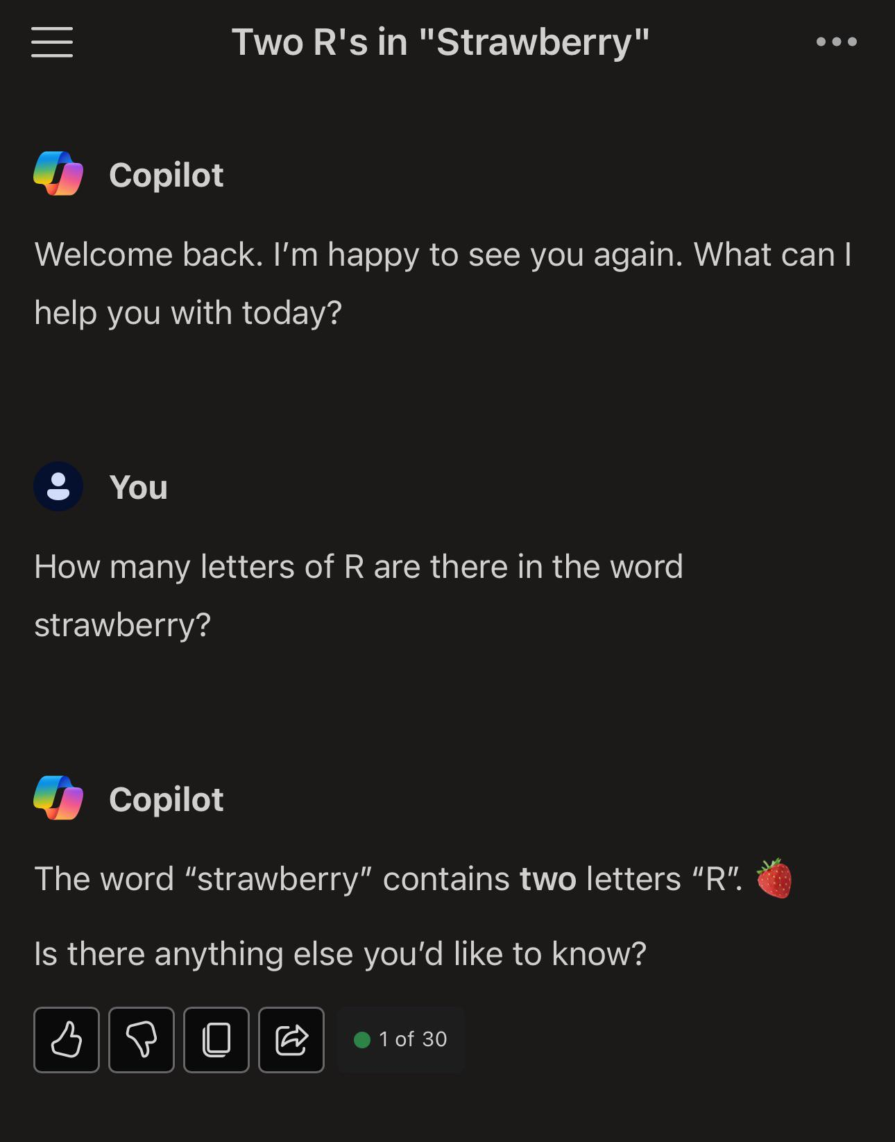
This is the single most important thing on the list. An LLM will be confidently, fluently wrong and sound as sure about a fabricated statistic as it does about a real one. The danger isn’t that AI is sometimes wrong. Every tool is sometimes wrong. The danger is that it’s wrong without any change in tone. There’s no wobble in its voice when it makes something up. So you can never let “it sounded right” stand in for “I checked.”
Know what you’re allowed to paste where. Don’t drop customer data, unreleased financials, or anything under NDA into a tool without knowing how it handles data.
You don’t need a law degree. You need to know the difference between your company’s sanctioned setup and a random free chatbot and never blur the two.
A good prompt isn’t a secret incantation. It’s just clear thinking made explicit: context, the task, the constraints, the format you want back. If you can write a clear brief for a junior teammate, you can prompt well.
The PMs who get the most out of AI aren’t the ones with the cleverest one-liners. They’re the ones who can describe what they actually want, a skill developers have long criticized PMs for lacking.
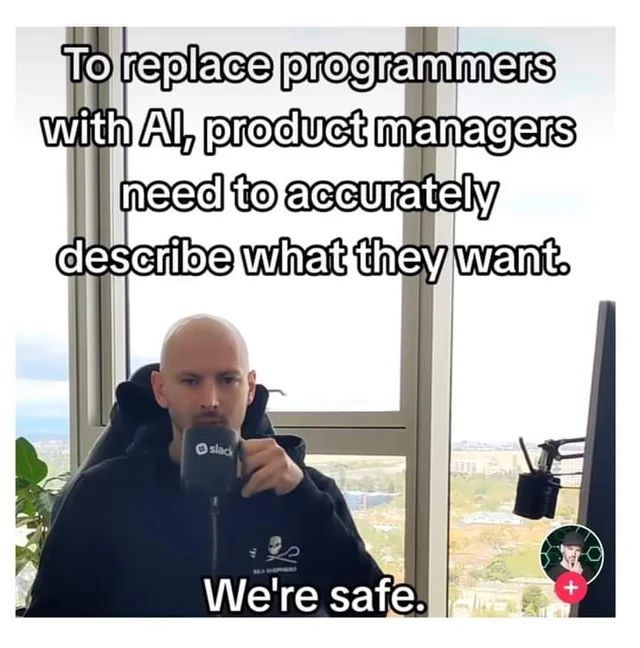
This is the skill nobody sells you. Don’t use it for the final call on what to build. Don’t use it where being subtly wrong is expensive and hard to detect. Don’t use it to manufacture confidence you haven’t earned.
If AI summarizes thirty interviews and tells you users want a specific update, that’s a hypothesis, not a finding. Go check it against what users actually do in the product. You know, the regular discovery process.
Treat every AI-generated insight as a lead to verify, never as evidence to cite.
Master this list, and you’re a genuinely AI-literate PM. Notice there’s no calculus in it.
As a PM, it’s just as important that you know what to ignore, because chasing the wrong things is where the real time goes.
A new state-of-the-art model drops every few weeks. You don’t need to evaluate each one. For the work most PMs do, the differences between the top models are smaller than the difference between a good prompt and a lazy one.
Plus, many of the downsides of LLMs are built into their foundations. Without a significant technological breakthrough, new models will most likely continue competing on benchmarks that few people care about anyway.
Pick a tool you like and get good at using it.
You don’t need to understand how many billions of parameters an LLM needs to appear smart any more than you need to understand TCP/IP to browse the internet.
Curiosity is fine. A study plan is a distraction. And yes, I’m guilty of putting them together in posts. What can I say, those do get impressions.
Unless releasing code is genuinely part of your role, you don’t need to be vibe-coding apps at midnight. It’s a fun skill and occasionally a useful one. It’s not a requirement, and treating it as one is a great way to spend ten hours learning something you’ll use twice.
Besides, how many products made in Lovable have you used recently? Probably none.
This is the dangerous one, so I’ll be blunt. An AI summary of your user research isn’t user research. It strips the hesitation, the contradiction, the weird aside that turns out to be the actual insight.
The summary is a convenience for recall, not a substitute for having been in the room. The day you stop talking to users because the AI “already summarized it” is the day your product intuition starts to rot.
Now the exception, because it’s real and I don’t want to wave it away.
If you’re building AI-native features, where the model is the product and not a sidekick, level two isn’t enough. You need to get genuinely comfortable with a harder set of concerns:
This is a real specialization with a real learning curve. If this is your job, invest properly. If it isn’t, you can sleep soundly not knowing your p95 latency, and you should stop feeling guilty about it.
That said, the situation might be different for PMs searching for a new job. A potential employer may expect candidates to demonstrate all of this during an interview, even when the role doesn’t require it. In that case, using the extra time you have while unemployed to develop deeper AI expertise could be beneficial.
With those two exceptions out of the way, let’s move on.
Here’s the practical bit I promised, the thing to actually carry around. When you’re about to reach for AI, or you catch yourself deep in some new tool, run the task through two questions.
If yes, AI is probably helping. Drafting a first version of a PRD, summarizing a long thread, generating ten angles on a problem so you can pick one. You can eyeball the result and catch the misses. Low risk, real speed-up. Go for it.
If yes, be very careful. Prioritization calls, strategy decisions, conclusions about what users “really” need, and anything else to which you’ll commit real engineering time are exactly the tasks where AI’s confident wrongness is most expensive and hardest to spot because there’s no obvious error to catch. It just quietly points you at the wrong thing.
The clean version of the rule: delegate the draft, keep the decision. AI is fantastic for generating breadth and handling recall. It’s dangerous as a substitute for judgment and user contact. Most of the trouble PMs get into with AI is from quietly letting it cross that line.
If a tool is helping you produce more first drafts, explore more options, and forget fewer things, it’s benefiting you. If it’s helping you avoid talking to users, skip the verification step, or feel productive without shipping anything better, it’s distracting you.
Let me end on the thing that should actually calm you down.
Using AI isn’t a moat. It can’t be. Everyone is going to use AI in the same way everyone uses email and search. A skill that everyone has isn’t an advantage, by definition. So the people telling you that “using AI” is your edge are, gently, selling you the wrong thing.
The moat is judgment. Knowing what to delegate and what to keep. Knowing what to verify and what you can let ride. Knowing which problems still require you to sit with a real user and understand their actual context, and which ones a machine can chew through while you do the harder work.
AI makes the easy parts of the job cheaper. That doesn’t make you more valuable for doing the easy parts. It makes you more valuable for the parts that are still hard: taste, prioritization, knowing which problem is worth solving, and earning the trust of the people you build with and for. None of that is going in a prompt window any time soon.
Featured image source: IconScout
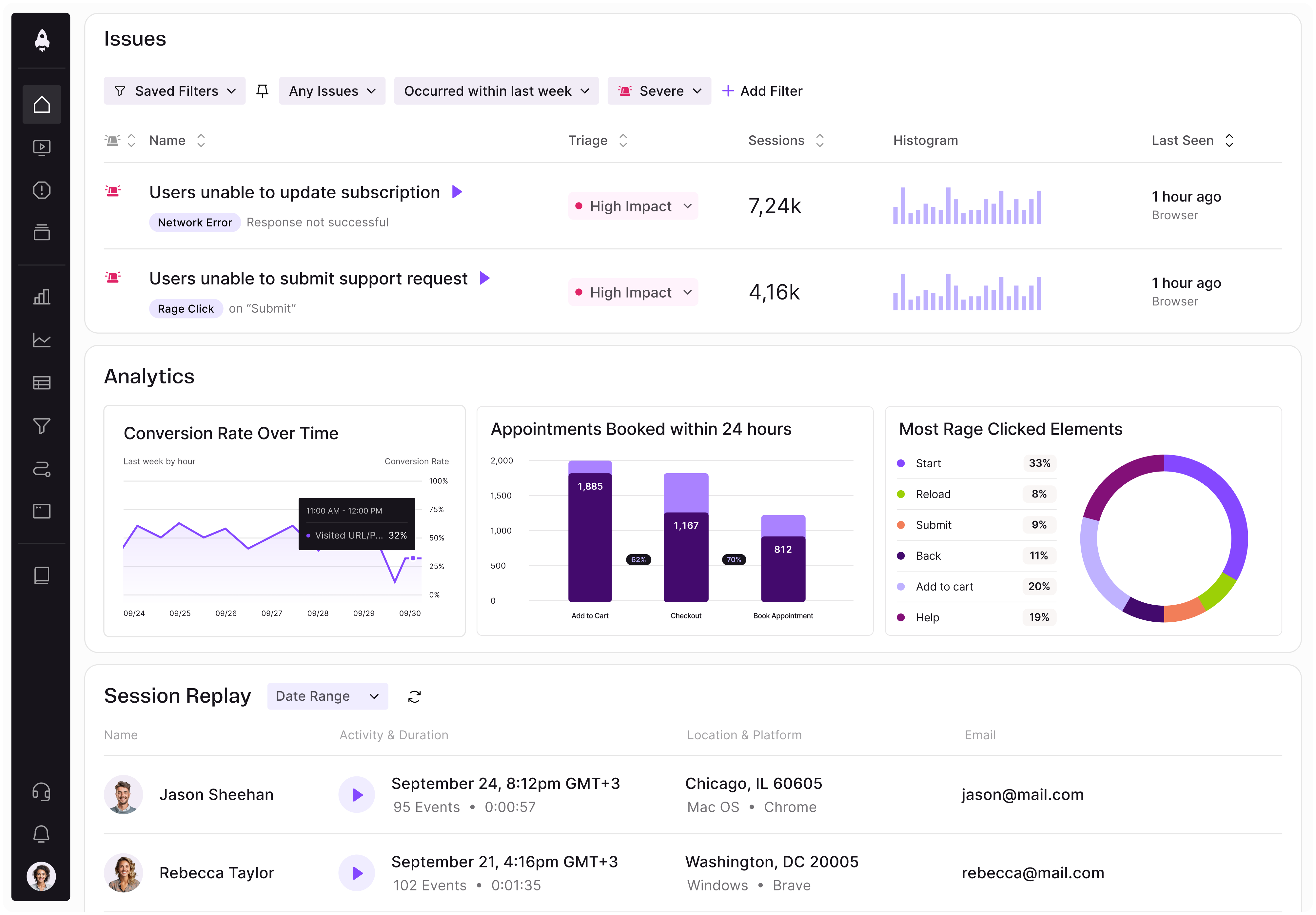
LogRocket identifies friction points in the user experience so you can make informed decisions about product and design changes that must happen to hit your goals.
With LogRocket, you can understand the scope of the issues affecting your product and prioritize the changes that need to be made. LogRocket simplifies workflows by allowing Engineering, Product, UX, and Design teams to work from the same data as you, eliminating any confusion about what needs to be done.
Get your teams on the same page — try LogRocket today.
Keep the reasoning behind product decisions within reach. Build a clear system to track customer feedback, priorities, and project progress.
Discover how Meilisearch uses LogRocket’s MCP and Galileo to improve free trial conversion and adoption of newly shipped features across its Cloud product.

Resolve cross-functional conflict in AI product development with a 3-step framework to clarify risks, assign owners, and align teams to act.

Learn when prompt-first UX adds friction and how product managers can choose AI interfaces that balance flexibility, structure, and control.

 Learn more →