I was scrolling through my old CodePens recently and found a few demos I’d built for an article on CSS text styles inspired by the Spider-Verse. One stippling effect had more than 10,000 views. Two glitch pens had 13,000 combined. They are still some of the most-seen things I have ever made.
They were text effects built with CSS pushed far past ordinary interface work, and people paid attention. That stuck with me because it now feels oddly out of step with the rest of frontend culture.
A few years ago, CSS experiments had a visible audience. Developers posted strange effects, illustrations, cheatsheets, and one-off demos because they were fun to make and satisfying to figure out. That corner of the internet has thinned out. Many of the people who once posted CSS art now post about AI, startups, and productivity. The shift says something larger about the culture of frontend work.
CSS art faded at the same moment the industry became more practical, more performative, and more expensive. The browser still has room for visual spectacle, but only when that spectacle can justify itself through business value, design status, or technical prestige. Small, obsessive experiments lost ground in a culture that increasingly asks every creative decision to defend its existence.
CSS art is what happens when developers use HTML and CSS to make illustrations, effects, and visual experiments instead of conventional interfaces. The appeal was never reducible to usefulness. A pure-CSS water droplet or typographic illusion had little to do with shipping product features, but it taught people how the medium behaved. You learned about shadows, layering, borders, transforms, gradients, clipping, and composition by trying to make something that had no obvious place in a roadmap.
That kind of work turned CSS into a medium rather than a support layer. It gave people a reason to play, and that play developed taste, patience, and technical instinct. A lot of developers learned CSS through curiosity before they learned it through constraints.
That part mattered. Frontend once had a more visible space for discovery without immediate justification. CSS art thrived in that space because it rewarded attention and stubbornness. The person making it was usually trying to see how far the language could go, not building toward a résumé bullet or a metrics dashboard.
Somewhere along the way, frontend started treating seriousness as a virtue in itself. CSS got folded into the language of systems, governance, maintainability, and performance. All of that work matters. None of it is trivial. But the shift also narrowed what counted as valuable.
Portfolios are judged by polish, restraint, and closeness to current product aesthetics. Visual choices are expected to look intentional in a very specific, professionalized way. A flourish now needs a rationale. A surprising choice needs a justification. A playful experiment is more likely to be treated as unserious than as evidence of skill.
Someone recently posted a piece of CSS art and one of the replies questioned its “production value.” That phrase explains a lot. The work was being measured against a standard that had nothing to do with why it existed in the first place.
Once a field starts evaluating everything through production logic, entire forms of creativity become harder to recognize. The question stops being whether something is clever, challenging, or memorable. The question becomes whether it maps neatly to a shipping product, a design system, or a business outcome. CSS art has very little leverage in that framework.
The irony is that CSS itself is better than ever. More of the browser’s visual behavior is natively available now than at any earlier point in frontend’s history. Effects that once required JavaScript, browser hacks, or animation libraries are increasingly possible with CSS alone. Scroll-driven animation is one obvious example, but the broader point holds across the language. The platform became more expressive at the same time the culture around it became less hospitable to low-stakes experimentation.
That change has less to do with the medium than with the environment in which people use it. Frontend work now comes with a heavier cognitive and professional load. Tooling is denser. Architecture matters more. Accessibility, performance, rendering models, bundle size, and cross-device behavior all sit closer to the center of the job. Even relatively small projects can feel freighted with enterprise expectations.
In that atmosphere, play starts to look indulgent. Spending an afternoon layering shadows until text glows exactly the right way can feel harder to defend when the surrounding culture keeps redirecting attention toward frameworks, AI workflows, and system-level concerns. The permission structure changed. Developers still can experiment, but the culture no longer treats experimentation as central to the craft.
The same narrowing shows up in design discourse. A familiar pattern online now involves treating stylistic choices as evidence of legitimacy or fraudulence. A UI uses gradients, serif-display fonts, pill-shaped buttons, glossy icon treatments, or purple accents, and people rush to classify it as AI-generated, vibe-coded, or lazy.
That move is intellectually thin, but it has become common because it lets taste masquerade as discernment. Instead of saying a design feels stale, people say it feels fake. Instead of admitting they are reacting to a trend they no longer enjoy, they imply the work lacks effort or authorship.
That dynamic matters because it shrinks the aesthetic field. Developers and designers stop asking whether something works and start asking what it signals. The result is not better criticism. It is social policing disguised as sophistication.
That logic was visible in the reaction to Nomba, the Nigerian fintech company whose UI circulated on X and was mocked as possible vibe coding. The visual evidence amounted to familiar product-design cues: serif display fonts, gradient buttons, gradient icon treatments, and a fintech look people had clearly grown tired of.
The discussion moved almost immediately from style to authenticity. The interface was called boring, lazy, and empty, mostly because it resembled a design language that had become overfamiliar. The critique carried itself as if it were saying something serious about craft, when it was mostly expressing fatigue with a trend.
Here is the version of the homepage UI that drew the criticism:

After the backlash, Nomba updated the interface:

That kind of response reveals how quickly aesthetic familiarity becomes grounds for dismissal. The interface did not have to fail functionally to be judged as suspect. It only had to look like something the internet had already seen too many times. Once that threshold is crossed, people stop describing what is actually wrong and start reaching for insinuation.
That is not criticism at its best. It is trend exhaustion with a moral posture attached to it.
A lot of people now talk as if AI invented the styles they find unbearable. In writing, the cliché might be certain punctuation or flattened pseudo-formal phrasing. In design, it might be gradients, soft SaaS cards, polished icon backgrounds, or a familiar startup color palette. But those patterns became common long before AI arrived. AI learned them because humans repeated them until they became the ambient visual language of the web.
That distinction matters. What people are reacting to is not machine-made style in any pure sense. They are reacting to saturation. They have seen the same signals too often, and they want distance from them. That is a real impulse, but it is often described badly. Instead of saying the style feels exhausted, people frame the issue as authenticity, as though certain visual choices prove a lack of human intention.
That framing guarantees the cycle will repeat. Once one set of conventions becomes coded as artificial, creators abandon it. Then a new set of conventions takes over. Then AI tools learn those conventions too. The supposed fingerprint keeps moving because the real issue was never machine-ness. It was repetition. The internet tires of its own habits, then invents a more flattering explanation.
The web is still capable of visual extravagance. The official Lando Norris website makes that obvious. It is technically ambitious, formally confident, and full of interaction design that feels closer to a digital installation than a conventional brand site. It won the 2025 Awwwards Site of the Year for reasons that are easy to understand the moment you see it:

Work like that proves there is still appetite for beauty and experimentation online. It also shows where that experimentation now tends to live. Sites of that caliber usually emerge from specialized teams, real budgets, and toolchains that sit well outside the reach of ordinary product work. The visual ambition is still there, but it has become more expensive, more curated, and more exclusive.
That changes the culture. CSS art once felt accessible because almost anyone could attempt it. You needed a browser, a code editor, and enough persistence to keep nudging properties around until the thing on the screen started resembling the thing in your head. The barrier was low, which meant experimentation was distributed. A lot of people could participate.
The most celebrated forms of web artistry now often depend on a different economy. They belong to campaigns, portfolios, agencies, and brand experiences that can absorb the cost of spectacle. The web still rewards formal ambition, but it increasingly does so in ways that make experimentation feel professionalized rather than communal.
A culture loses something when it only respects work that can justify itself in managerial language. Some of the best technical instincts are formed while making things that have no immediate business case. CSS art belonged to that category. So did the frustrating geometry exercises, the overengineered text effects, the demos that took hours to get right and existed mostly because someone wanted to see whether they could be done.
That work sharpened perception. It taught developers how visual decisions accumulate. It made them pay attention to texture, rhythm, layering, and precision. The artifact itself might have been useless in the narrow sense, but the practice was not. A developer who has spent hours wrestling with a pointless visual problem often comes away with a stronger feel for the medium than someone who has only ever used CSS as a compliance layer between design and implementation.
The real loss is not that CSS art stopped being fashionable. Trends were never the point. The loss is that frontend culture now has less patience for forms of effort that do not immediately resolve into utility, polish, or professional signaling. Creativity is still around, but it moves through tighter channels and answers to stricter expectations.
CSS art mattered because it preserved a little room for obsession without permission. It gave people a way to care about the web as a medium, not just as an industry. That room has gotten smaller, and the field is poorer for it.
As web frontends get increasingly complex, resource-greedy features demand more and more from the browser. If you’re interested in monitoring and tracking client-side CPU usage, memory usage, and more for all of your users in production, try LogRocket.
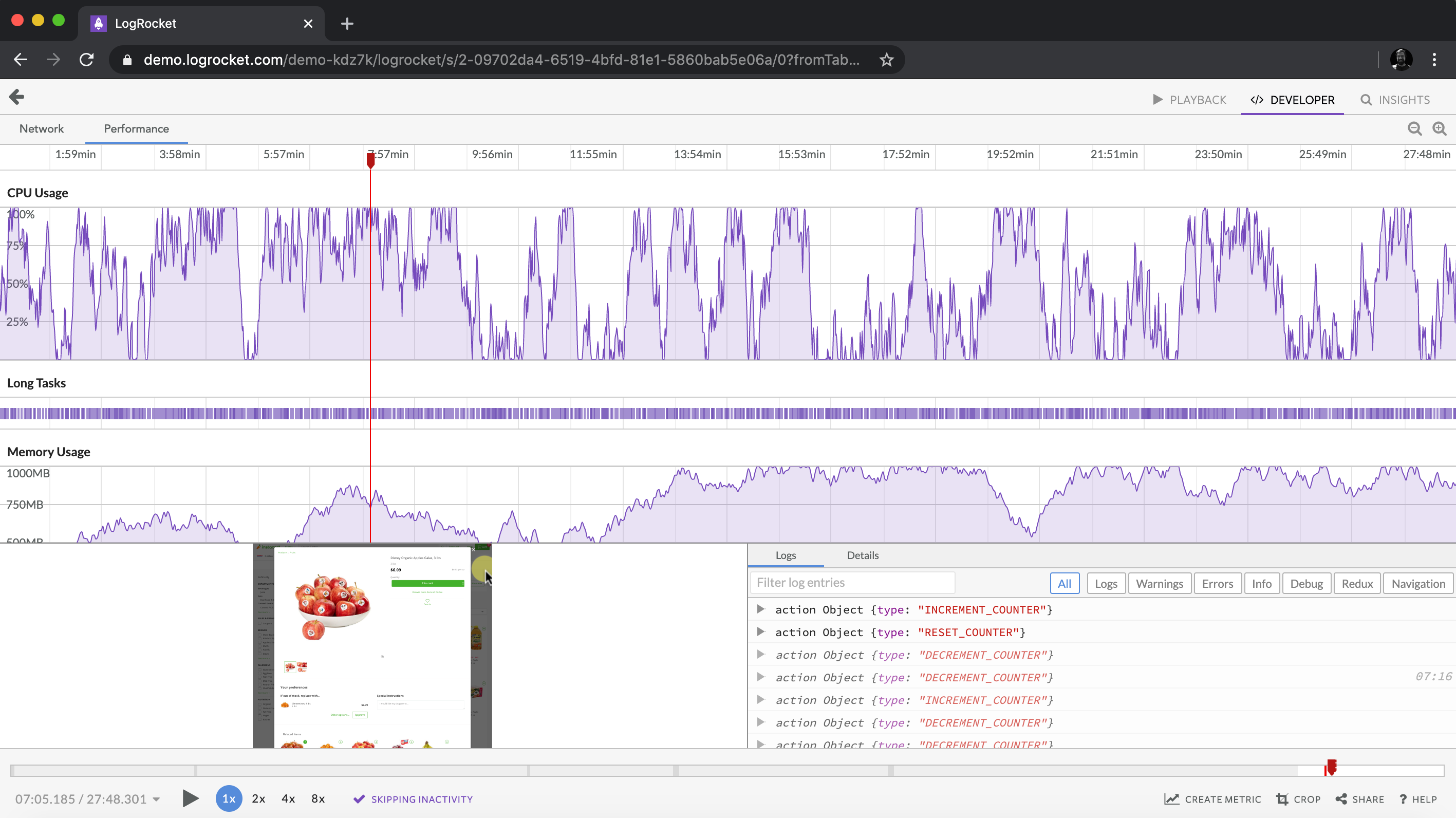
LogRocket lets you replay user sessions, eliminating guesswork around why bugs happen by showing exactly what users experienced. It captures console logs, errors, network requests, and pixel-perfect DOM recordings — compatible with all frameworks.
LogRocket's Galileo AI watches sessions for you, instantly identifying and explaining user struggles with automated monitoring of your entire product experience.
Modernize how you debug web and mobile apps — start monitoring for free.

Learn how to run Cline locally with Ollama to build a secure, private AI coding agent that keeps your proprietary code off cloud servers.

Compare TanStack Charts, Recharts, and Chart.js by building the same React dashboard three times. See how each library’s mental model affects your code.

Is the Rust React Compiler’s 10x speed claim real? We put Babel, Vite (Oxc), and Bun to the test on a real app to find out where the speed actually matters.

Compare the top AI development tools and models of September 2026. View updated rankings, feature breakdowns, and find the best fit for you.
Would you be interested in joining LogRocket's developer community?
Join LogRocket’s Content Advisory Board. You’ll help inform the type of content we create and get access to exclusive meetups, social accreditation, and swag.
Sign up now

 Learn more →