Brand archetypes can define your personality, but they don’t tell you what to say. The imagined speaker technique turns an abstract archetype into a real voice you can write through.

When AI made generating design concepts almost effortless, I realized the most valuable part of a critique was no longer the interface itself. It was understanding the context, tradeoffs, and judgment behind the final design. Here’s how AI has changed the way I run design critiques—and why I think that’s making them better.
The Double Diamond design process helps UX teams balance exploration with decision-making, guiding projects from problem discovery to solution delivery. Learn how each phase works, which tools to use, when the reverse Double Diamond makes sense, and why the framework remains relevant for modern product development.
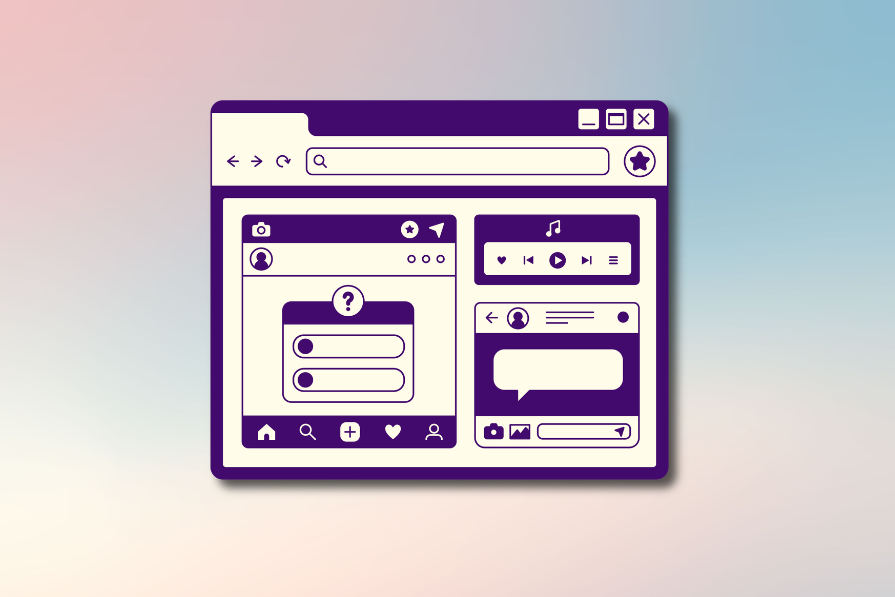
Skeuomorphism helped define early digital interfaces by mimicking real-world objects to make technology more intuitive. Learn how it compares with flat design and neumorphism, why it declined, and where it still has a place in modern UX.
Inclusive design is evolving beyond accessibility alone. This guide explains how UX designers can create more inclusive products through usability, accessibility, neurodiverse UX, adaptive personalization, multimodal design, and culturally aware product experiences.
Research is becoming more democratized, product cycles are accelerating, and AI is transforming synthesis and ResearchOps. Here are the three trends shaping UX research in 2026.
Adaptive interfaces personalize experiences using behavioral signals and machine learning. But when personalization becomes autonomous, systems can reinforce patterns, limit discovery, and shape user behavior in ways designers didn’t intend.
Designers are automating faster than they’re thinking. Learn why overreliance on AI is hurting UX and how to use it without losing creativity.
AI can summarize your research, sketch your wireframes, and even write your copy, but it can’t care about your users. Here’s how to make sure your UX stays human-first, not machine-led.
The “modern” UI/UX era is already aging. I believe the next wave of design will change how users see — and feel — technology. Here are my predictions for what’s coming next.
AI support isn’t the future, it’s the present. Here’s how AI-first helpdesks work, why they’re winning over users, and how to design one effectively.
I once misused parallax scrolling and learned the hard way how motion can frustrate users. Here’s what went wrong, how I fixed it, and practical tips to keep motion design engaging and user-friendly.