Visual Studio Code has become the default code editor for much of the software industry. Most modern teams recommend it by default, and many go further by building internal extensions that effectively turn VSCode into a full IDE. For a growing number of developers, especially newcomers, installing VSCode is simply part of getting started, often without seriously considering alternatives.
That ubiquity is not accidental. VSCode is approachable, extensible, and powerful enough to cover a wide range of workflows. But its popularity also masks a set of structural trade-offs that become harder to ignore as projects grow or hardware constraints tighten.
As a hybrid application built on web technologies, VSCode does not use system resources as efficiently as a truly native editor. On high-end machines, this overhead is often absorbed without much friction. On low- and mid-range systems, however, it shows up as slower startup times, input latency, and declining responsiveness as extensions accumulate and codebases scale.
These limitations have started to reshape the code editor landscape. In response, a new generation of editors has emerged, built with compiled, native languages such as C++ and Rust, and designed to prioritize performance, lower resource consumption, and more predictable behavior.
This article takes a closer look at VSCode’s fundamental architectural constraints and then surveys fast, native alternatives for developers who are increasingly frustrated with its performance trade-offs.
We’ll examine:
ecode: A ultra-lightweight C++ editor that delivers VSCode-like features with near-zero resource usage
CudaText: A fast, native IDE-style editor focused on stability, explicit tooling, and predictable performance
Lite: An ultraminimal C/Lua editor built for maximum speed and total user control
Lite XL: A more modern, actively maintained evolution of Lite with stronger out-of-the-box productivity
Lapce: A Rust-based native editor that mirrors VSCode’s workflow without Electron’s overhead
Zed: A high-performance Rust editor aiming to be a full VSCode replacement with native rendering and built-in AI
Many of VSCode’s most common performance complaints are not the result of poor implementation or missing optimizations. Instead, they stem from foundational design choices. VSCode is built on Electron, a hybrid architecture that favors cross-platform reach and extensibility over native efficiency. As the editor has expanded in scope, these trade-offs have become more visible.
The following drawbacks are difficult to fully eliminate because they are tied directly to VSCode’s architecture and the complexity required to support its ecosystem at scale:

VSCode is an Electron app built with TypeScript. It renders web-based UI through Chromium and enables OS-level features via Electron API and Node.js:
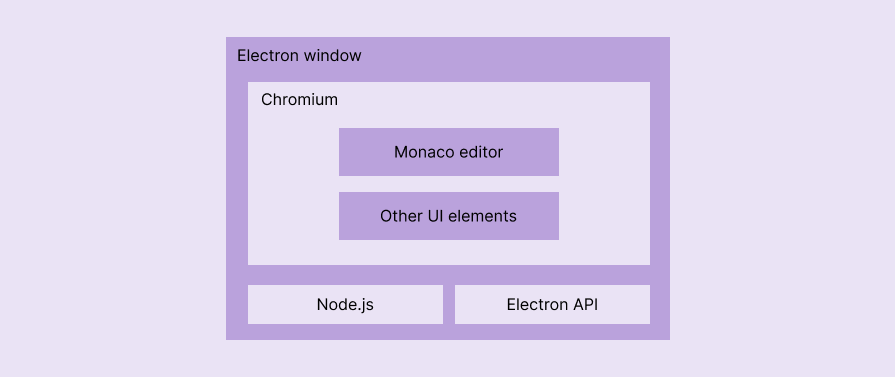
Electron’s architecture solves the cross-platform desktop app development from the developer productivity perspective; it won’t offer a solution to compete with truly native apps from the performance and fair resource consumption perspectives. When developers download VSCode, they also download a copy of Chromium and Node.js, which also start consuming more resources while using VSCode.
Electron, Chromium, and Node.js are growing heavier with new web specifications, so VSCode is becoming more complex and resource-intensive. Developers have to keep upgrading hardware to run up-to-date VSCode smoothly, and the usability of VSCode on a low-end machine has already become a dream.
VSCode’s hybrid app architecture won’t survive in the long run due to the growing excessive, unethical resource consumption.
Past platform-specific native code editors didn’t have a good look and feel, weren’t open-source, or missed mandatory productivity features. They couldn’t compete with VSCode. VSCodium, Cursor, and Eclipse Theia-like editors came as VSCode alternatives, but at an architectural level, they are all Electron apps — yet another hybrid code editor won’t become a fast VSCode alternative.
The new open-source, lightweight, cross-platform native editor movement started innovating fast alternatives to VSCode; they have almost all VSCode features, but are fast and lightweight. The following emerging native VSCode alternatives are becoming popular rapidly since they can effortlessly defeat VSCode with impressive performance:
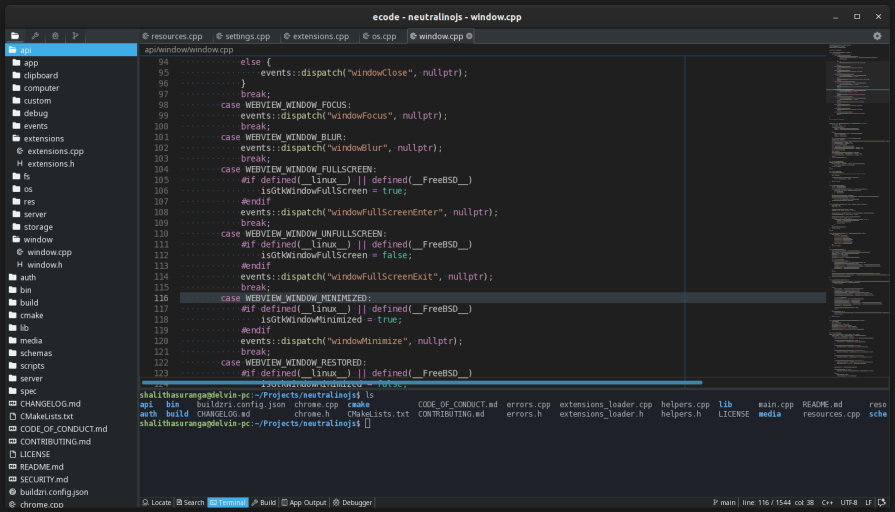
ecode is a lightweight, fast, native code editor written in C++. It offers many features associated with VSCode while aiming for more efficient CPU, GPU, RAM, and storage usage than Electron-based editors. It is minimal and fully featured by default, meaning common capabilities ship with the application rather than requiring extensive post-install configuration.
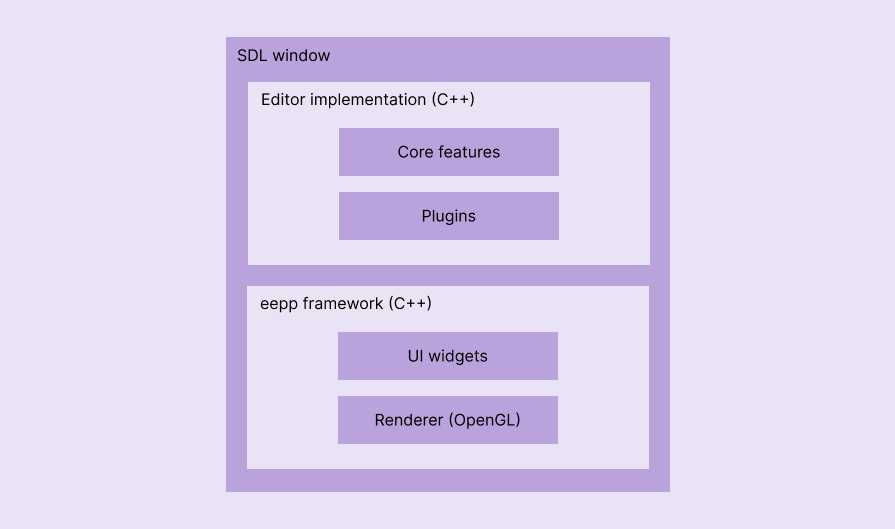
ecode is written in C++ and uses the eepp cross-platform framework for GUI widgets. eepp relies on SDL for OS-level features and OpenGL for low-level rendering:
You can download portable versions of ecode or installers for Linux, Windows, macOS, FreeBSD, and Haiku from GitHub releases.
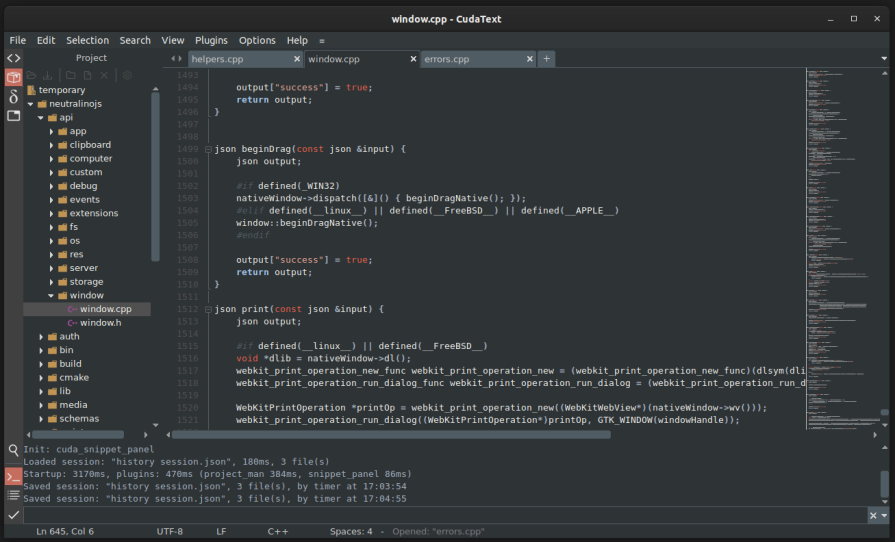
CudaText is a fast, native code editor written in Free Pascal that leans into a traditional IDE-style experience. Its interface may feel retro at first, but under the hood it offers many of the productivity features developers expect from modern editors, while consuming far fewer resources than VSCode. It is especially appealing to developers who value stability, explicit tooling, and predictable performance.
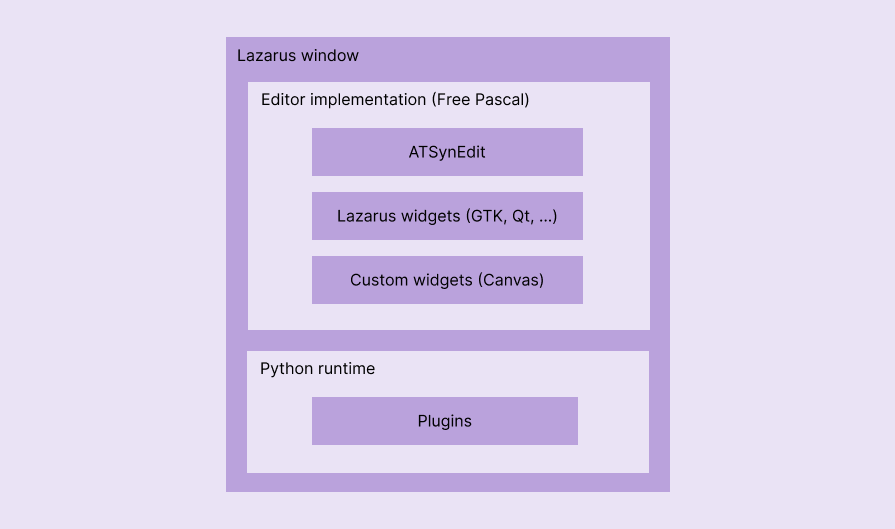
CudaText is a native app written using Free Pascal and Lazarus. It draws native, platform-independent UI components through Free Pascal Canvas and native, platform/widgets-library-dependent UI components via Lazarus Component Library (LCL). Its code editor engine resides in a different project called ATSynEdit:
You can download CudaText for Linux, Windows, Solaris, FreeBSD, etc, from SourceForge. Community-based unofficial builds are available for macOS and Haiku OS, and you can also build the project from source.
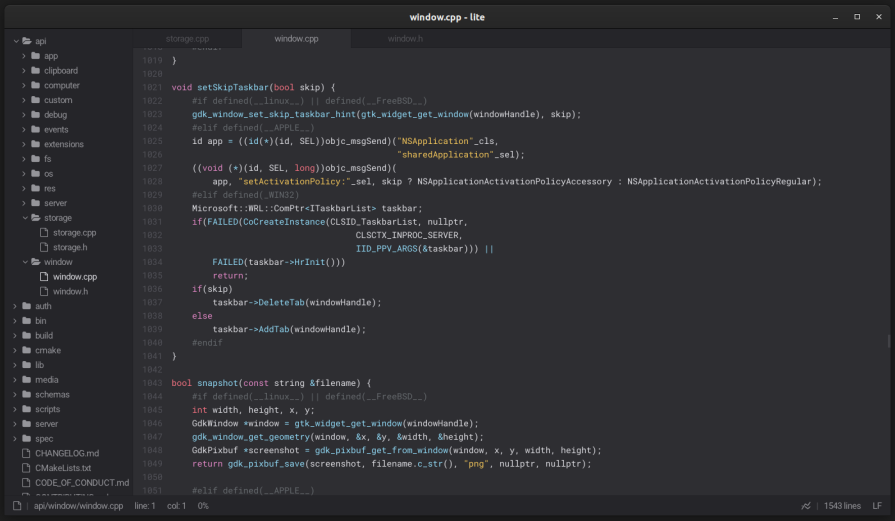
Lite is an ultra-lightweight native editor designed around the idea that a code editor should do very little by default and let users build up functionality as needed. Written in C and Lua, its core is intentionally minimal, with most features implemented through simple, scriptable plugins. Lite favors control and performance over polish, and it works best for developers who enjoy shaping their tools themselves.
Lite is considered a completed project. The official repository is no longer actively updated, and the project philosophy encourages developers to customize, extend, and personalize the editor by writing their own plugins in Lua.
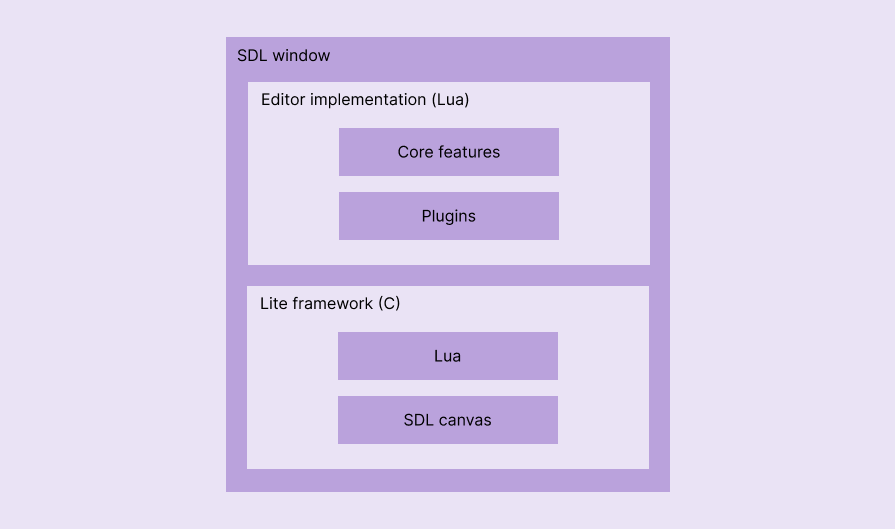
Lite is a native app written in C and Lua. It creates a simple editor framework with low-level, OS-level feature implementations in C by embedding Lua and renders native low-level graphics directly through SDL:
You can download pre-compiled Lite binaries for Linux and Windows from GitHub releases, or compile it yourself by downloading the Lite GitHub repository.
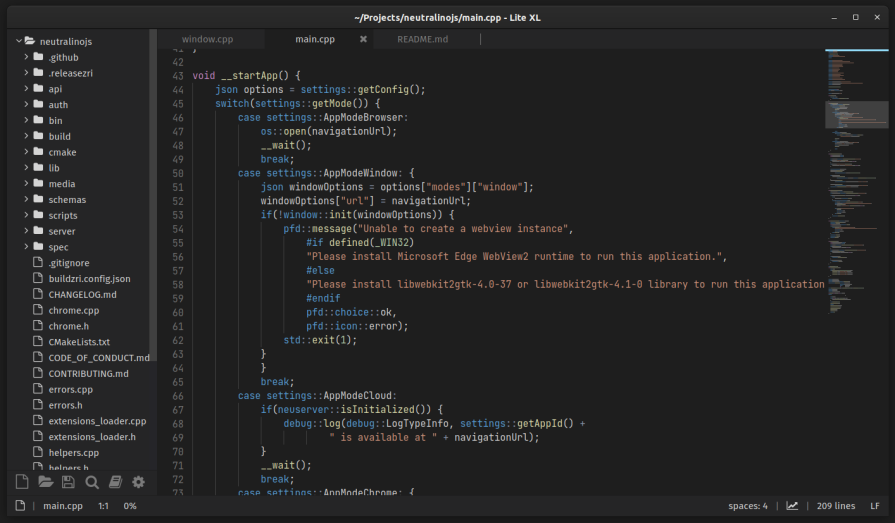
Lite XL builds on Lite’s minimalist foundation while addressing many of its practical limitations. It adds more VSCode-like productivity features, active maintenance, and a growing plugin ecosystem, while remaining extremely lightweight. For developers who like Lite’s philosophy but want a more complete out-of-the-box experience, Lite XL strikes a better balance.
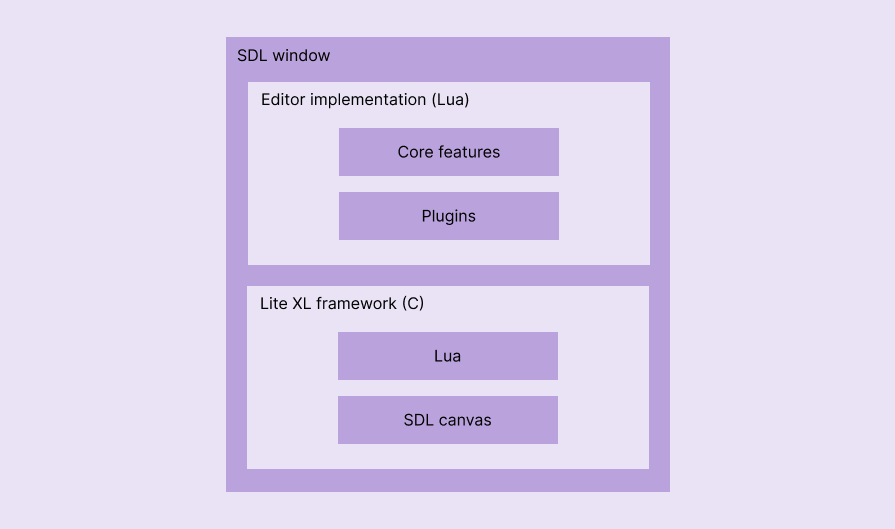
Both Lite and Lite XL apps use the same architecture, and they are native apps written using C with an embedded Lua interpreter:
You can download Lite XL portable versions or installers for Linux, Windows, and macOS from the official downloads page, download directly from GitHub releases, or build it on any supported platform by downloading the GitHub repository.
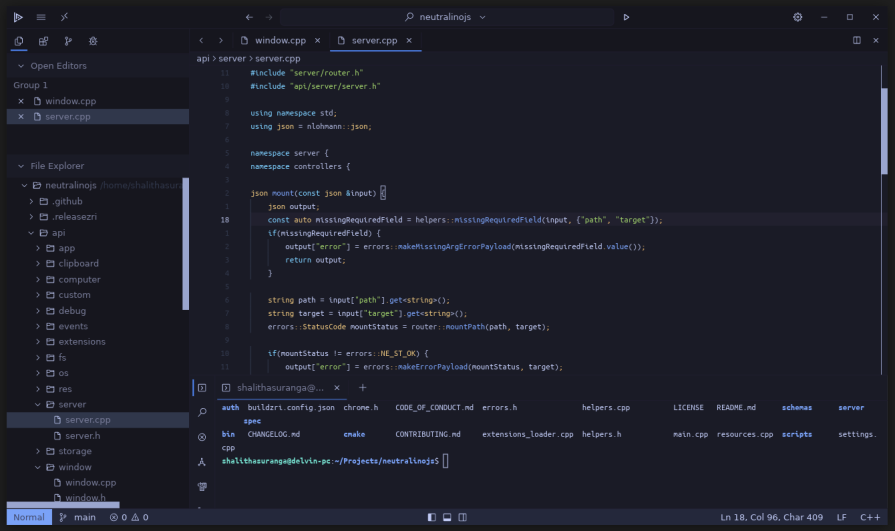
Lapce is a native Rust-based editor that deliberately mirrors VSCode’s layout and workflow, making it easier to switch without relearning core interactions. While not as minimal as some other native editors, it significantly reduces memory usage compared to VSCode and retains many modern IDE features. Lapce is best suited for developers who want familiarity without Electron’s overhead.
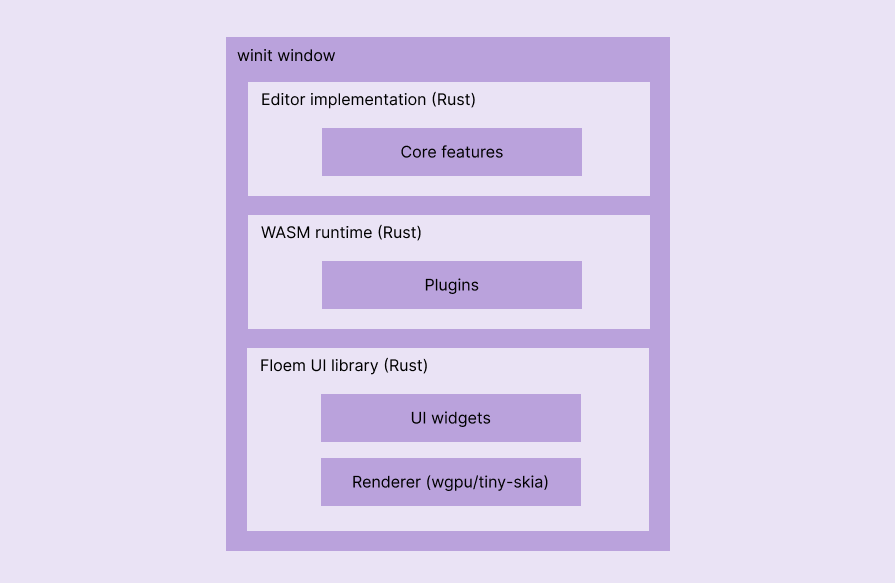
Lapce is a native app written purely in Rust. It uses the Floem cross-platform, native UI library that handles low-level GPU rendering via wpgpu and CPU-based rendering via a lightweight, Rust-based port of Skia called tiny-skia:
You can download the latest Lapce portable package for Linux and installers for Windows and macOS from the official website.
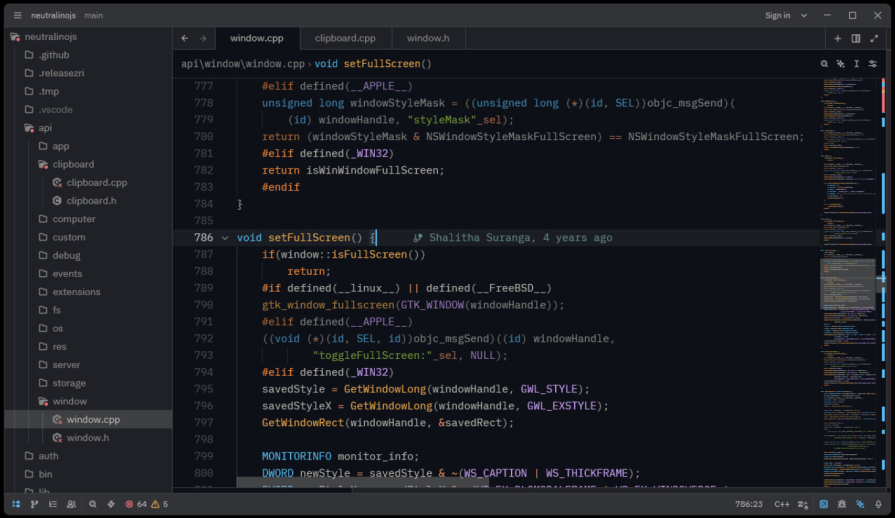
Zed is a modern, performance-focused native editor written in Rust that aims to compete directly with VSCode at the feature level. It is heavier than most other native alternatives, but still far more efficient than Electron-based editors. With built-in AI features, strong Git integration, and smooth onboarding for existing VSCode users, Zed positions itself as the most practical drop-in replacement for modern workflows.
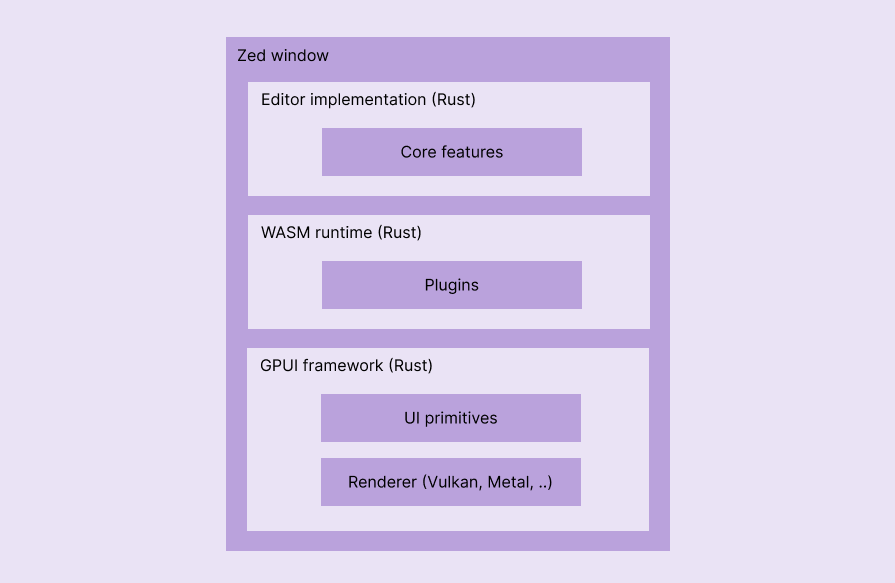
Zed is a native app written in Rust. It uses the GPUI cross-platform native UI library that handles hardware-accelerated, low-level rendering via platform-specific 3D graphics libraries like Vulkan, Metal, and DirectX:
You can download Zed for Linux, Windows, and macOS from the official downloads page.
The following comparison table summarizes VSCode’s and each native VSCode alternative’s features, architecture, and other characteristics:
| Comparison factor | VSCode | ecode | CudaText | Lite | Lite XL | Lapce | Zed |
|---|---|---|---|---|---|---|---|
| Approx. disk space requirement | 500MB | 50MB | 20MB | 1MB | 6MB | 60MB | 400MB |
| Approx. RAM usage (while working on an average-sized project) | 600MB | 40MB | 40MB | 20MB | 40MB | 90MB | 90MB |
| Look and feel | Modern, fully-featured | Retro IDE-like, modern | Retro IDE-like, modern | Ultraminimalistic, modern | Minimal, modern | Minimal, modern | Modern, fully-featured |
| Performance on low/mid-end computers | Slow | Extremely-fast | Extremely-fast | Extremely-fast | Extremely-fast | Fast | Fast |
| Plugins ecosystem status | Overloaded | Small | Growing | Small | Growing | Growing | Growing rapidly |
| Plugins written in | TypeScript/JavaScript | C++ (embedded into the software binary) | Python | Lua | Lua | Any WASI-supported language | Any WASI-supported language |
| Built-in modal editing support | No | No | No | No | No | Yes | Yes |
| Written in | TypeScript | C++ | Free Pascal | C and Lua | C and Lua | Rust | Rust |
| Underlying cross-platform framework | Electrom | eepp | Lazarus/Free Pascal libraries | None | None | Floem | GPUI |
| Rendering handled by | Chromium | OpenGL | Lazarus/Free Pascal libraries | SDL | SDL | wgpu or tiny-skia | GPUI (Vulkan, Metal, ..) |
| VSCode features availability (in a scale of 1 to 5) | — | 3/5 | 3/5 | 2/5 | 3/5 | 4/5 | 5/5 |
| Migration easiness as a long term VSCode user (in a scale of 1 to 5) | — | 2/5 | 1/5 | 1/5 | 4/5 | 5/5 | 5/5 |
| Simplicity and user-control during coding (in a scale of 1 to 5) | 2/5 | 5/5 | 3/5 | 5/5 | 5/5 | 3/5 | 2/5 |
| Code repository | GitHub | GitHub | GitHub | GitHub | GitHub | GitHub | GitHub |
VSCode’s rise reshaped how developers think about tooling. By prioritizing cross-platform reach, extensibility, and rapid iteration, it made powerful workflows accessible to a broad audience. But those same architectural choices also introduced trade-offs that become harder to ignore as projects grow and hardware constraints tighten.
The editors explored in this article illustrate that those trade-offs are not inevitable. Tools like Lite and Lite XL show how far performance can be pushed when simplicity is the goal. Lapce and Zed demonstrate that it is possible to retain familiar, VSCode-like workflows while dramatically reducing runtime overhead. Together, they point toward a different set of priorities: native rendering, predictable resource usage, and tighter control over complexity.
VSCode will likely remain the default editor for many developers. But its dominance is no longer uncontested. As native editors mature and close remaining feature gaps, they challenge the assumption that modern developer tools must be built on heavyweight web stacks. The result is not a single replacement for VSCode, but a more diverse ecosystem where performance, hardware constraints, and architectural choices once again matter.

Compare five React toast libraries for features, bundle size, accessibility, performance, and React 19 compatibility.
See how Tecovas built a patching agent that turns LogRocket’s Galileo AI issue analysis into GitHub PRs, with a developer reviewing every fix before it ships.

Explore OctaneJS, a compiler-first alternative to React. Build a task dashboard and learn about rendering, hooks, asynchronous UI, and React compatibility.
Explore Vercel’s vgpu, a WebGPU library for AI agents. Learn to build a dynamic shader in Next.js and validate rendering output with headless testing in Node.js.
Would you be interested in joining LogRocket's developer community?
Join LogRocket’s Content Advisory Board. You’ll help inform the type of content we create and get access to exclusive meetups, social accreditation, and swag.
Sign up now
 Learn more →