With the AI landscape changing daily — even by the hour — how do we design for the power of AI without falling into the trap of bias, misinformation, and dubious ethics? It feels like a tall order.

One answer might be in using a set of principles that place the human at the center of our focus. These principles not only make sure that AI systems are user-friendly but also that the system is fully functional and covers the use cases we are designing for.
Before we begin, we need to acknowledge the unique and anxiety-inducing challenges that designers are now facing:
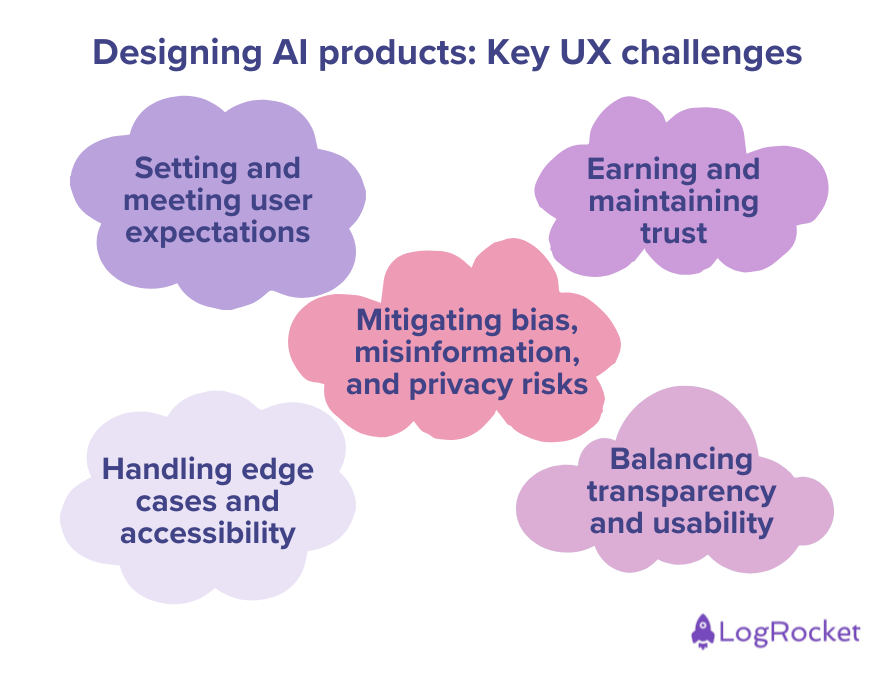
There are a number of guiding principles we can follow to help us address these challenges and ensure the AI products, services, and features we design keep the user front-of-mind.
Let’s explore the principles that can guide us towards creating AI-powered product design tools that are both effective and ethical. These principles have been compiled from a number of great sources, such as IBM’s AI Design Principles, Google’s People + AI Guidebook, and Generative AI Principles from the ACM:
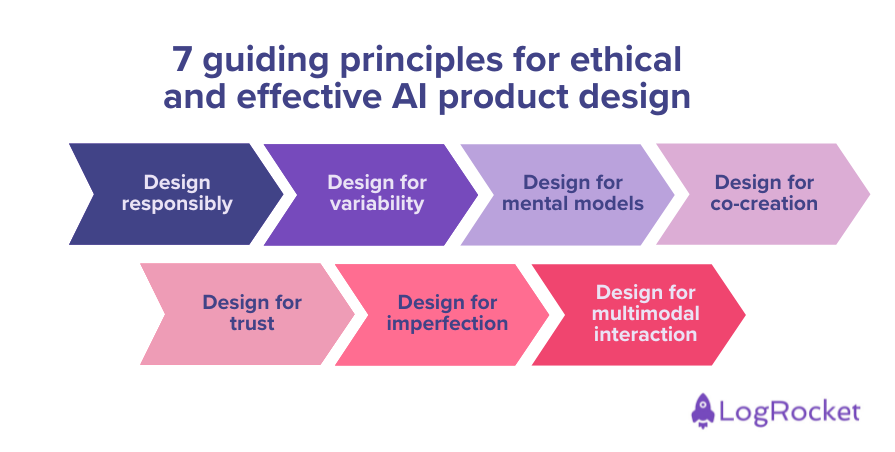
Even better, these have been tested with AI products already, so they provide a solid starting point — a framework you can adapt and customize as you navigate the unique contours of your own design challenges.
AI in product design is not about replacing humans; it’s about augmenting them. Start with the user, their needs, and their frustrations, trying to understand the value that AI can bring to their workflow — such as automation, idea generation, or something more profound.
Never forget that data integrity should be uppermost in our minds. Just treat it with the respect it deserves.
A product design is not static; it evolves and builds on previous iterations. Design your AI systems to mirror this fluidity — expect multiple outputs, acknowledge the inherent variability of generative AI, and build in the capacity to adapt.
Don’t get lost in the technical weeds. Instead, focus on allowing users to understand the benefits of AI, not the intricacies of its algorithms. Frame AI’s value in the context of their workflows. Most importantly, show them how it saves time, reduces errors, and displays insights that were out of reach to them.
Product design is rarely a solo effort. Design your AI systems to foster collaboration and co-creation. Allow users to edit AI generated outputs, as well as to add their own insights and comments. When automation fails, give the user control over their work. Create a feedback loop that allows users to contribute to the ongoing improvement of the AI system.
Again, let’s repeat this: creating trust is the most important aspect of our job. Users need to understand how the AI arrives at its conclusions, why it flags certain risks, and how it makes its recommendations. Explainability is not a luxury, it’s a necessity.
AI is not infallible. Design your systems to acknowledge and handle errors gracefully. Provide clear paths forward from failure, allowing users to recover and contribute to the AI’s ongoing improvement.
Product design is not just about text. It’s about images, diagrams, physical prototypes, and real-world environments.
Design your AI systems to embrace this multimodal reality. Go beyond text-based interaction and explore how voice commands, image recognition, or even augmented reality can enhance the user experience.
By using these principles as a design guide, we can navigate the complex world of product design with confidence, ensuring AI serves as a tool for progress, not a source of unintended consequences. The future of design isn’t artificial intelligence; it’s augmented intelligence, a co-pilot between our creativity and AI’s power.
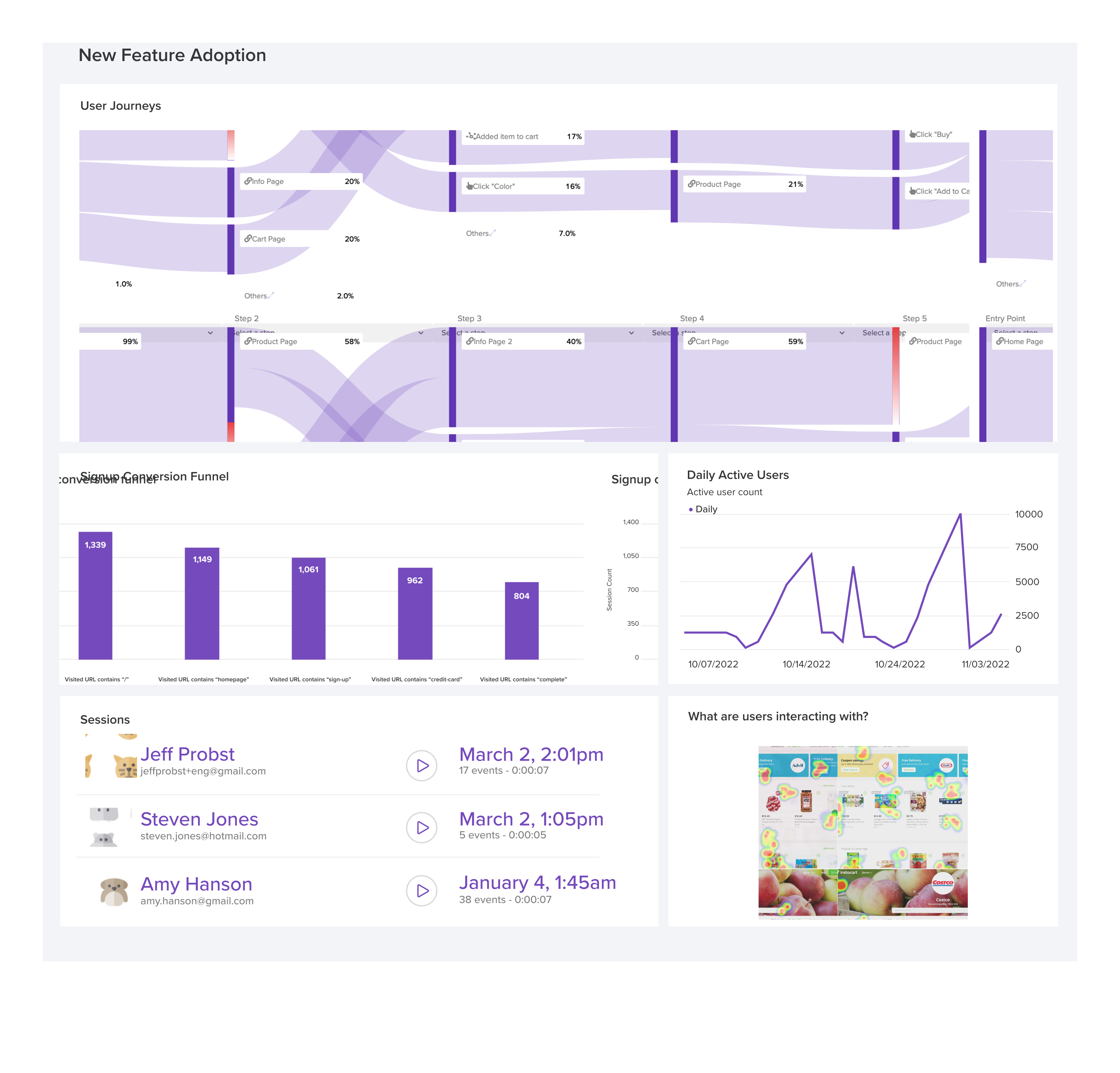
LogRocket's Galileo AI watches sessions and understands user feedback for you, automating the most time-intensive parts of your job and giving you more time to focus on great design.
See how design choices, interactions, and issues affect your users — get a demo of LogRocket today.

Research is becoming more democratized, product cycles are accelerating, and AI is transforming synthesis and ResearchOps. Here are the three trends shaping UX research in 2026.
AI tools can generate beautiful UI concepts in minutes, but most teams struggle to integrate those outputs into real design systems. This guide explores why AI drifts toward generic patterns and how to build governed workflows that keep speed without sacrificing brand consistency.
Adaptive interfaces personalize experiences using behavioral signals and machine learning. But when personalization becomes autonomous, systems can reinforce patterns, limit discovery, and shape user behavior in ways designers didn’t intend.

Security requirements shouldn’t come at the cost of usability. This guide outlines 10 practical heuristics to design 2FA flows that protect users while minimizing friction, confusion, and recovery failures.



 Learn more →